- English
- Español
- Português
- русский
- Français
- 日本語
- Deutsch
- tiếng Việt
- Italiano
- Nederlands
- ภาษาไทย
- Polski
- 한국어
- Svenska
- magyar
- Malay
- বাংলা ভাষার
- Dansk
- Suomi
- हिन्दी
- Pilipino
- Türkçe
- Gaeilge
- العربية
- Indonesia
- Norsk
- تمل
- český
- ελληνικά
- український
- Javanese
- فارسی
- தமிழ்
- తెలుగు
- नेपाली
- Burmese
- български
- ລາວ
- Latine
- Қазақша
- Euskal
- Azərbaycan
- Slovenský jazyk
- Македонски
- Lietuvos
- Eesti Keel
- Română
- Slovenski
- मराठी
- Srpski језик
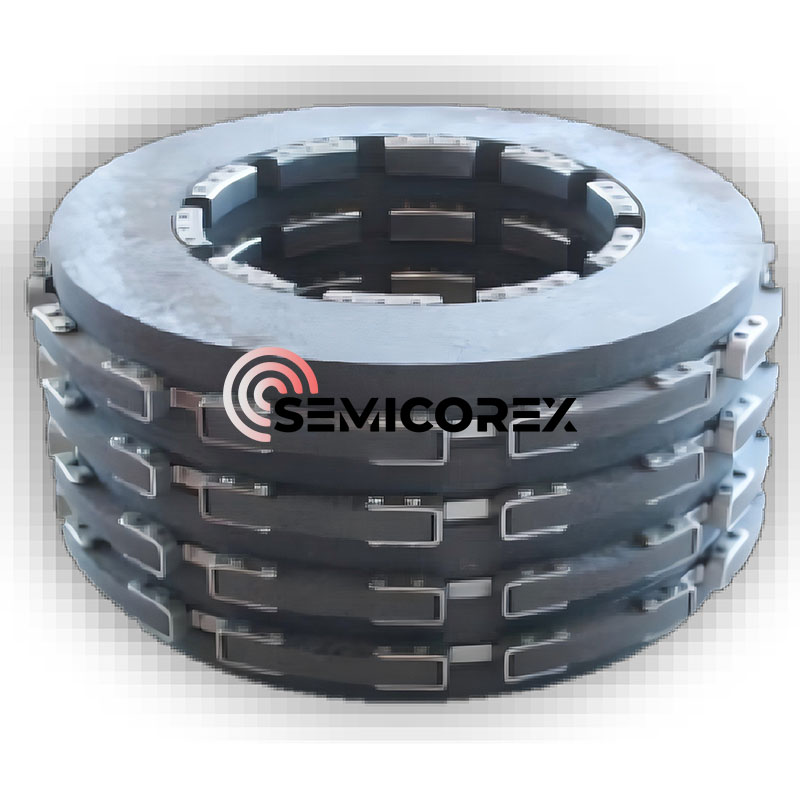

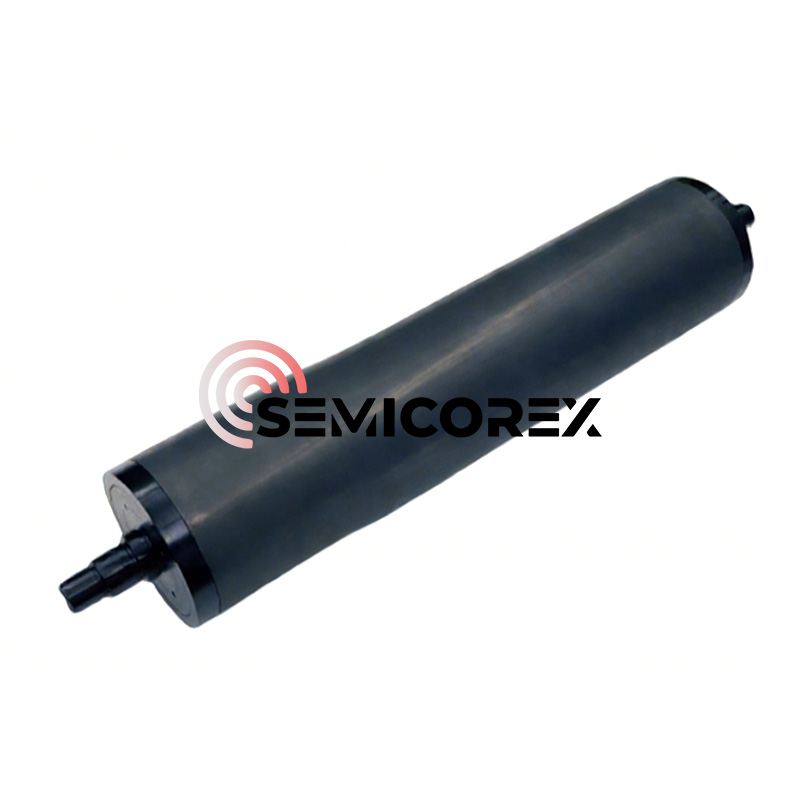
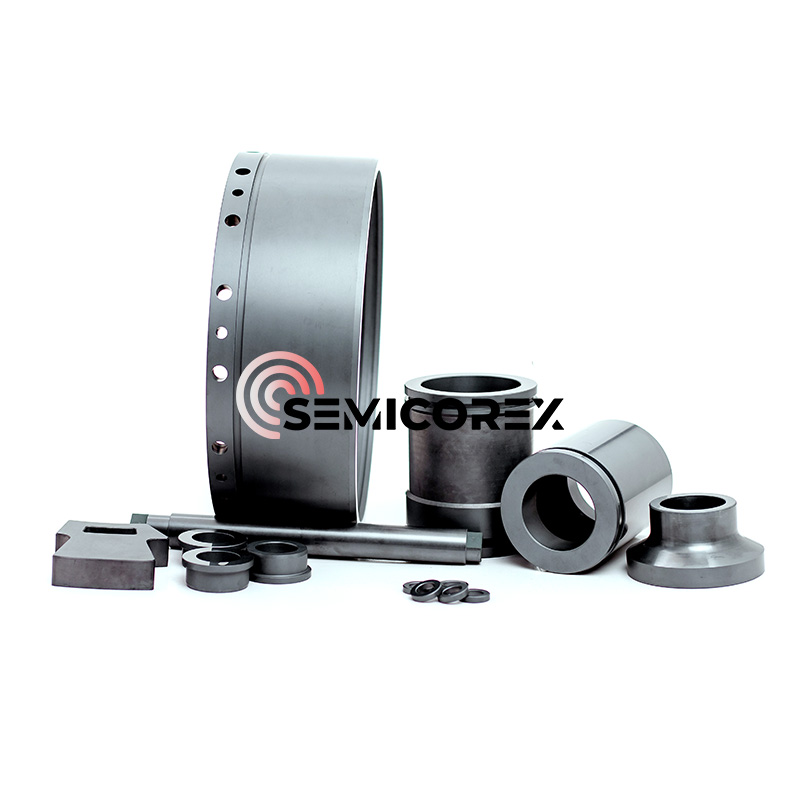
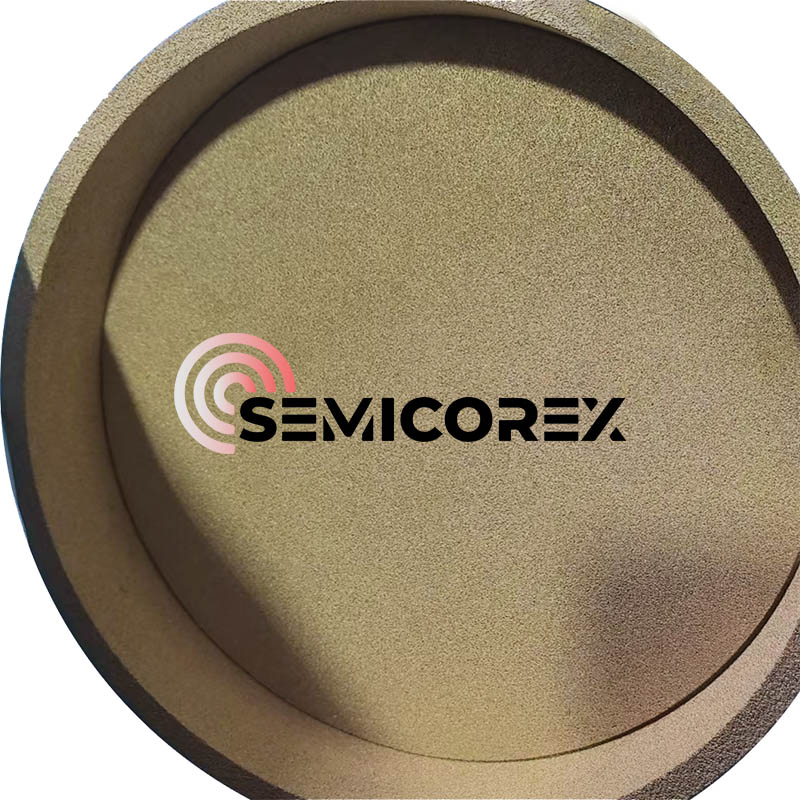
Porous Tantalum Carbide Rings
Semicorex Porous Tantalum Carbide Rings are high-performance refractory components specifically designed for the Physical Vapor Transport (PVT) process of Silicon Carbide (SiC) crystal growth, featuring a monolithic sintered structure that offers exceptional thermal stability and controlled gas permeability.*
Send Inquiry
Product Description
In the high-stakes manufacturing of Silicon Carbide (SiC) ingots, the "hot zone" environment is one of the most punishing in the semiconductor industry. Operating at temperatures between 2,200 and 2500℃ standard refractory materials often sublimate or introduce metallic impurities that ruin crystal lattices. Semicorex Porous Tantalum Carbide Rings are engineered as a monolithic, sintered solution to these extreme challenges, providing the structural and chemical reliability required for long-duration crystal growth cycles.
1. Monolithic Sintered Structure: Purity and Integrity
Unlike traditional coated graphite components, our Porous TaC Rings are manufactured through a full-body sintering process. This results in a "solid-state" ceramic body that maintains its chemical identity throughout its entire volume.
Ultra-High Purity: With tantalum carbide content exceeding 99.9%, these rings minimize the risk of outgassing or the release of metallic trace elements that could lead to micropipes or other dislocations in the SiC ingot.
No Delamination: Because the ring is not a coating, there is no risk of peeling or "flaking" due to thermal expansion mismatch, a common failure mode in standard coated parts.
2. Engineered Porosity for PVT Optimization
The "Porous" nature of our Tantalum Carbide is a deliberate engineering choice for the Physical Vapor Transport (PVT) process. By controlling the pore size and distribution, we enable several critical process advantages:
Thermal Insulation & Gradient Control: The porous structure acts as a high-performance thermal insulator, helping to maintain the steep and stable temperature gradients necessary to drive SiC vapor from the source material to the seed crystal.
Vapor Phase Management: The permeability of the ring allows for controlled gas diffusion and pressure equalization within the crucible, reducing turbulence that can disrupt the crystallization interface.
Lightweight Durability: The porosity reduces the overall mass of the hot zone components, allowing for faster thermal response times while maintaining the high mechanical strength inherent to TaC.
3. Exceptional Chemical and Thermal Resilience
Tantalum Carbide possesses the highest melting point of any binary compound ($3,880^\circ C$). In the presence of aggressive SiC vapor and high-temperature environments, our Porous Tantalum Carbide Rings offer:
Inertness to Si/C Vapor: Unlike graphite, which can react with silicon vapor to form SiC and change the C/Si ratio, TaC remains chemically stable, preserving the intended stoichiometry of the growth process.
Thermal Shock Resistance: The interconnected porous framework provides a degree of elasticity that allows the ring to survive repeated, rapid thermal cycles without cracking.
Hot Tags: Porous Tantalum Carbide Rings, China, Manufacturers, Suppliers, Factory, Customized, Bulk, Advanced, Durable
Product Tag
Related Category
Silicon Carbide Coated
CVD SiC
Semiconductor Components
TaC Coating
Specialty Graphite
Ceramic
Quartz
Wafer
CVD Furnace
Other Semiconductor Material
UHTCMC
Send Inquiry
Please feel free to give your inquiry in the form below. We will reply you in 24 hours.