- English
- Español
- Português
- русский
- Français
- 日本語
- Deutsch
- tiếng Việt
- Italiano
- Nederlands
- ภาษาไทย
- Polski
- 한국어
- Svenska
- magyar
- Malay
- বাংলা ভাষার
- Dansk
- Suomi
- हिन्दी
- Pilipino
- Türkçe
- Gaeilge
- العربية
- Indonesia
- Norsk
- تمل
- český
- ελληνικά
- український
- Javanese
- فارسی
- தமிழ்
- తెలుగు
- नेपाली
- Burmese
- български
- ລາວ
- Latine
- Қазақша
- Euskal
- Azərbaycan
- Slovenský jazyk
- Македонски
- Lietuvos
- Eesti Keel
- Română
- Slovenski
- मराठी
- Srpski језик

Porous Alumina Vacuum Chuck
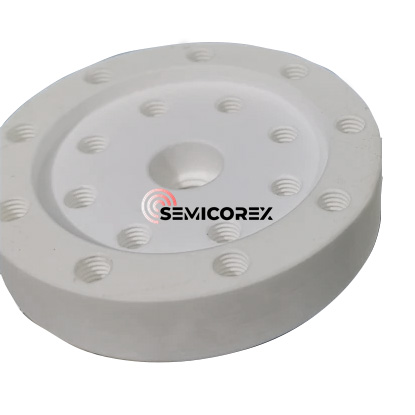
Semicorex Porous Alumina Vacuum Chuck leverages advanced material science to ensure uniform suction and zero-damage handling across the most demanding semiconductor fabrication processes. As a leading provider of high-performance ceramic solutions, Semicorex specializes in engineering premium Porous Alumina Vacuum Chucks that set the industry standard for wafer stability and precision.*
Send Inquiry
Product Description
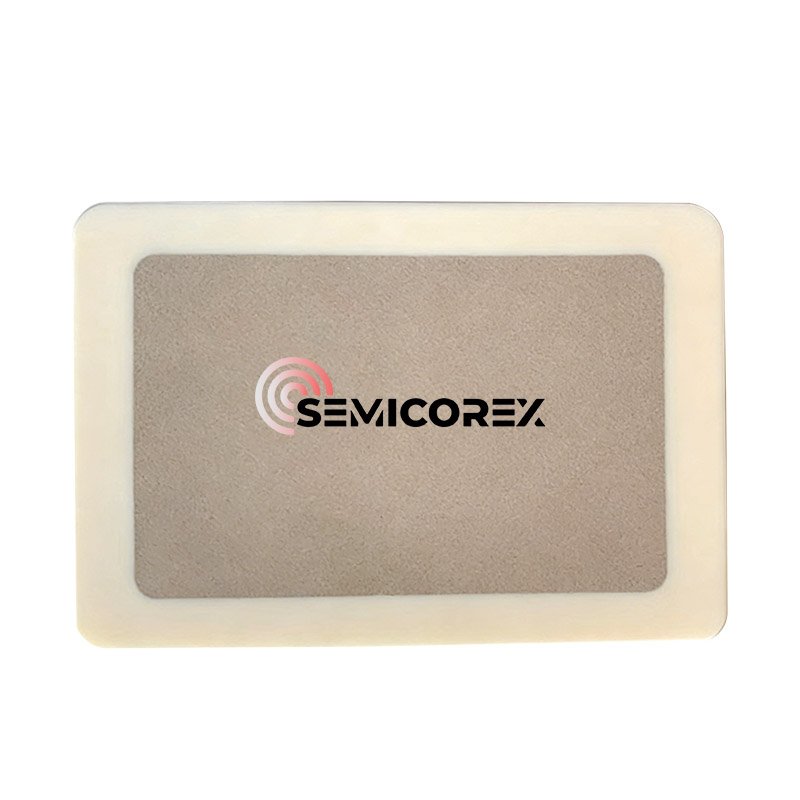
Semicorex Porous Alumina Vacuum Chuck is the carrier platform to fix the products using the vacuum suction principle, its part of transfer vacuum is typically Alumina porous ceramic plate. The porous ceramic plate is built into the countersunk hole in the base, its perimeter is bonded and sealed to the base, and the base is machined by the dense ceramic or metal materials. Under the minus pressure in the working environment, the chuck is connected to the vacuum pump through the porous structure inside the ceramic plate to draw air, making the area below the wafer forms a vacuum area which much lower than the external atmospheric pressure. Under effect of the strong pressure difference, the wafer is firmly attached to the surface of the chuck. Typically, the higher the vacuum degree under the wafer, the tighter the adhesion between the chuck and the workpiece, and the stronger the adsorption force.
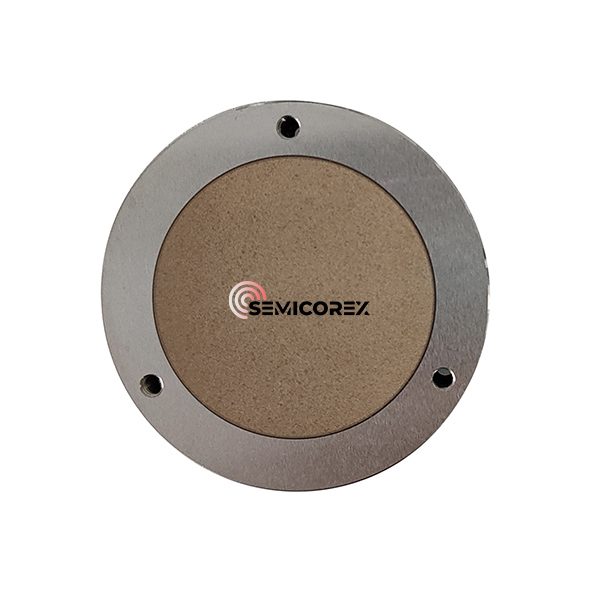
In the semiconductor and microelectronics industries, precision is not just a requirement—it is the standard. The Porous Alumina Vacuum Chuck (also known as a Ceramic Vacuum Chuck) is a critical component designed to provide uniform, non-marring suction for delicate substrates during lithography, inspection, and dicing processes.
What is a Porous Alumina Vacuum Chuck?
Unlike traditional metal chucks that use machined grooves to create suction, a porous ceramic chuck utilizes a specialized microscopic pore structure. This allows vacuum pressure to be distributed evenly across the entire surface of the workpiece, preventing the "dimpling" or deformation often seen with grooved designs.
Key Technical Specifications
To understand the performance of these components, we look at the material properties of high-purity Al2O3:
|
Property |
Value (Typical) |
|
Material Purity |
99% - 99.9% Alumina |
|
Pore Size |
10μm to 100μm (Customizable) |
|
Porosity |
30% - 50% |
|
Flatness |
< 2.0μm |
|
Hardness (HV) |
> 1500 |
Why Choose Porous Alumina Over Traditional Materials?
1. Superior Flatness and Uniformity
The microscopic pore structure ensures that the vacuum force is applied to 100% of the contact area. According to industry data, uniform suction reduces wafer stress by up to 40% compared to traditional grooved stainless steel chucks.
2. High Thermal Stability
Alumina ceramics possess a low coefficient of thermal expansion (CTE). In high-temperature processing or laser-based inspection, the chuck maintains its dimensions, ensuring the focus depth remains constant.
3. ESD and Contamination Control
High-purity alumina is chemically inert and naturally resistant to corrosion. Furthermore, specialized "Black Alumina" or anti-static coatings can be applied to prevent Electrostatic Discharge (ESD), which is responsible for nearly 25% of semiconductor yield loss in some environments.
Primary Applications in High-Tech Manufacturing
Semiconductor Wafer Processing
The primary use case is in Photolithography and Wafer Probing. The extreme flatness (<2μm) ensures that the wafer stays within the narrow depth-of-field of advanced optical systems.
Thin-Film Solar Cell Production
For flexible or extremely thin substrates, traditional vacuum channels can cause physical damage. The "breathable" surface of the porous ceramic acts as a gentle air cushion or suction plate, protecting fragile layers.
Optical Lens Grinding
Porous alumina is used to hold lenses during precision grinding, where any vibration or uneven pressure would result in optical aberrations.
Frequently Asked Questions (FAQ)
Q1: How do you clean a Porous Alumina Vacuum Chuck?
A: Cleaning is vital to maintain suction. We recommend using ultrasonic cleaning in deionized water or specialized solvents. Because alumina is chemically stable, it can withstand most acid or alkaline cleaners. Ensure the chuck is baked dry to remove moisture from the pores.
Q2: Can the pore size be customized for specific substrates?
A: Yes. Smaller pores (approx. 10μm - 20μm) are better for ultra-thin films to prevent "print-through," while larger pores offer higher airflow for heavier or more porous workpieces.
Q3: What is the maximum operating temperature?
A: While the ceramic itself can withstand temperatures exceeding 1500℃, the vacuum chuck assembly (including seals and housings) is typically rated for up to 250℃ to 400℃ depending on the bonding method.
Hot Tags: Porous Alumina Vacuum Chuck, China, Manufacturers, Suppliers, Factory, Customized, Bulk, Advanced, Durable
Product Tag
Related Category
Silicon Carbide (SiC)
Alumina (Al2O3)
Silicon Nitride (Si3N4)
Aluminum Nitride (AIN)
Zirconia (ZrO2)
Composite Ceramic
Axle Sleeve
Bushing
Wafer Carrier
Mechanical Seal
Wafer Boat
Send Inquiry
Please feel free to give your inquiry in the form below. We will reply you in 24 hours.