
- English
- Español
- Português
- русский
- Français
- 日本語
- Deutsch
- tiếng Việt
- Italiano
- Nederlands
- ภาษาไทย
- Polski
- 한국어
- Svenska
- magyar
- Malay
- বাংলা ভাষার
- Dansk
- Suomi
- हिन्दी
- Pilipino
- Türkçe
- Gaeilge
- العربية
- Indonesia
- Norsk
- تمل
- český
- ελληνικά
- український
- Javanese
- فارسی
- தமிழ்
- తెలుగు
- नेपाली
- Burmese
- български
- ລາວ
- Latine
- Қазақша
- Euskal
- Azərbaycan
- Slovenský jazyk
- Македонски
- Lietuvos
- Eesti Keel
- Română
- Slovenski
- मराठी
- Srpski језик
Analysis of carbon-ceramic composite braking systems
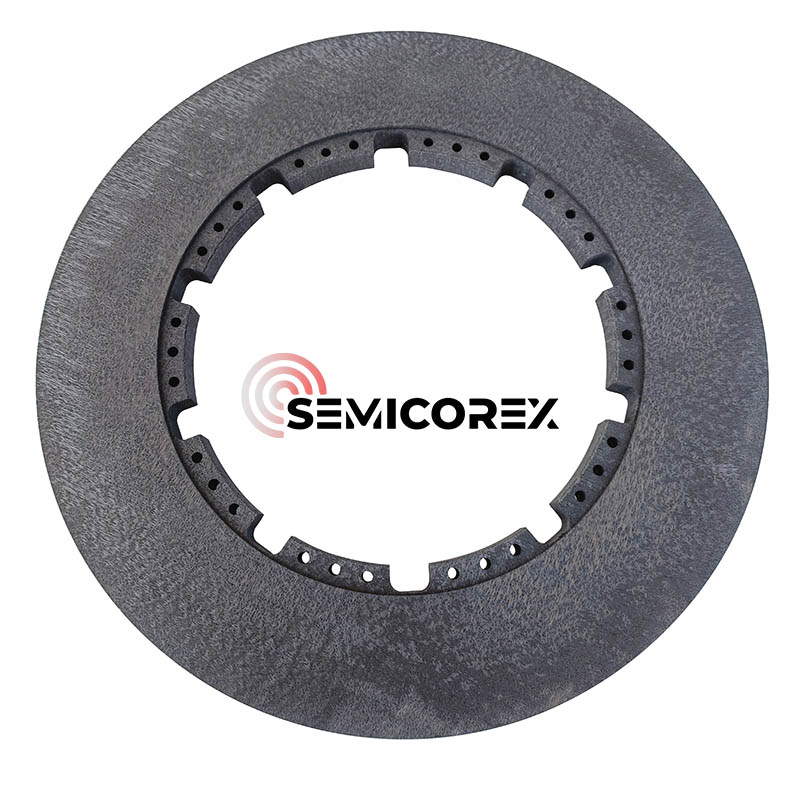
In the field of modern braking, carbon ceramic and carbon carbon composite materials represent the pinnacle of global braking technology. Originating in the aerospace industry, this technology has been successfully extended to the civilian vehicle and racing car markets, completely redefining braking performance, R&D technology, and lifespan.
I. Core Technological Advantages: Why Choose Carbon Ceramic?
Compared to traditional gray cast iron brake discs, carbon ceramic braking systems exhibit overwhelming advantages in several key indicators:
Extremely Lightweight: Carbon ceramic brake discs weigh only 30% to 40% of ordinary cast iron discs. Lighter unsprung mass means a more agile chassis, significantly improving vehicle handling response and acceleration performance.
Superior High-Temperature Resistance: The system can operate normally at extreme temperatures up to 1750°C without any heat fade, far exceeding the approximately 900°C limit of cast iron discs.
Extremely Long Service Life: Under normal usage conditions, its service life can reach 300,000 kilometers, several times that of ordinary cast iron discs (approximately 80,000 kilometers).
Stable Braking Performance: Carbon ceramic materials have a self-lubricating property, effectively reducing high-frequency noise and suppressing dust generation. Its coefficient of friction increases with temperature (up to 0.45~0.6), reducing braking distance by approximately 30%.
II. Craftsmanship: How are Carbon Ceramic Brake Discs Made?
The manufacturing of carbon ceramic brake discs is a highly technical process involving complex physicochemical reactions:
Targeted R&D and 3D Weaving: Raw material ratios are designed according to the application scenario, and 3D woven prefabrication technology is employed.
CVD (Chemical Vapor Deposition): The structural strength of the composite material is enhanced through chemical vapor deposition.
RMI (Fused Silicon Infiltration): Fused silicon infiltration is performed at temperatures up to 2600°C, giving the disc extremely high hardness and wear resistance.
Precision Machining and Testing: Fine grinding is performed using CNC machine tools, and the discs undergo rigorous testing including dynamic balancing, DTV (disc thickness variation) measurement, and inertial testing before leaving the factory.
III. Broad Application Prospects
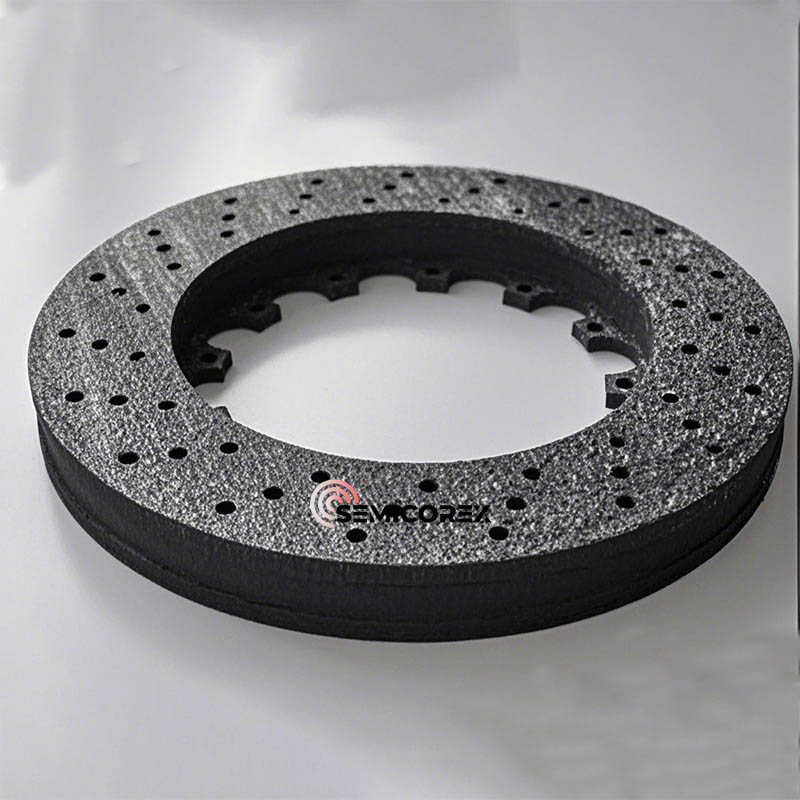
The application of carbon ceramic and carbon-carbon braking technologies has long since transcended the passenger vehicle sector. Leveraging its high tensile strength and thermal conductivity, this technology is widely used in the following fields:
Rail Transportation: Safety braking for high-speed trains.
Aerospace: Takeoff and landing braking for military and civilian aircraft.
Industrial Facilities: Safety locking for systems such as wind power generation systems.
In short, carbon ceramic braking systems are not only the ultimate upgrade goal for performance car owners, but also an inevitable choice for modern industry seeking efficient, safe, and long-life braking solutions.
Semicorex offers customs carbon ceramic composites products. If you have any inquiries or need additional details, please don't hesitate to get in touch with us.
Contact phone # +86-13567891907
Email: sales@semicorex.com
Previous:An Overview of SOI Substrates