
- English
- Español
- Português
- русский
- Français
- 日本語
- Deutsch
- tiếng Việt
- Italiano
- Nederlands
- ภาษาไทย
- Polski
- 한국어
- Svenska
- magyar
- Malay
- বাংলা ভাষার
- Dansk
- Suomi
- हिन्दी
- Pilipino
- Türkçe
- Gaeilge
- العربية
- Indonesia
- Norsk
- تمل
- český
- ελληνικά
- український
- Javanese
- فارسی
- தமிழ்
- తెలుగు
- नेपाली
- Burmese
- български
- ລາວ
- Latine
- Қазақша
- Euskal
- Azərbaycan
- Slovenský jazyk
- Македонски
- Lietuvos
- Eesti Keel
- Română
- Slovenski
- मराठी
- Srpski језик
Preparation Process of SiC Ceramics
Silicon carbide ceramics are among the most widely used materials in structural ceramics. Due to their relatively low thermal expansion, high specific strength, high thermal conductivity and hardness, wear resistance and corrosion resistance, and most importantly, their ability to maintain good performance even at temperatures as high as 1650°C, silicon carbide ceramics are widely used in various fields.
Common sintering methods for silicon carbide ceramics include: pressureless sintering, reaction sintering, and recrystallization sintering.
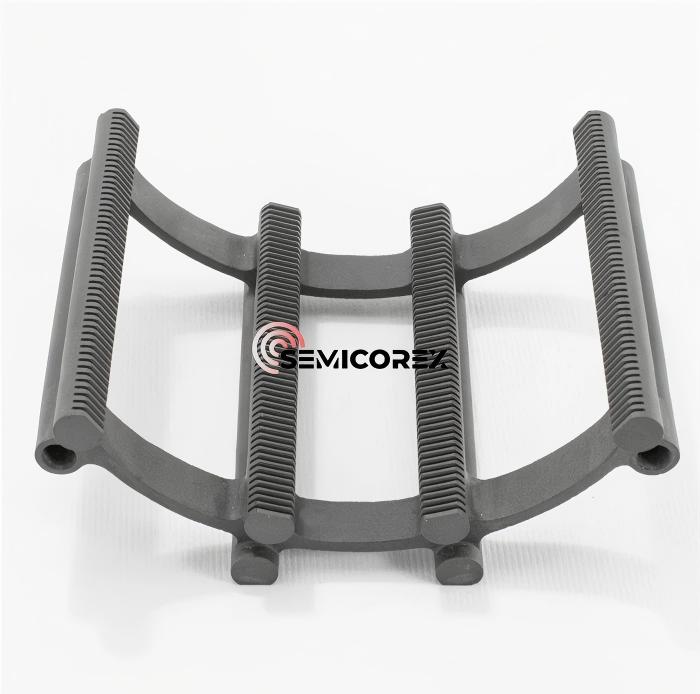
1. Reaction-sintered SiC(RBSiC)
Reaction sintering involves mixing a carbon source with silicon carbide powder, forming a compact, and then allowing liquid silicon to infiltrate the compact at high temperature and react with the carbon to form β-SiC, achieving densification. It exhibits near-zero shrinkage, making it suitable for large and complex parts. It also boasts low sintering temperature and low cost, but free silicon can reduce high-temperature performance.
Reaction-sintered SiC is a highly attractive structural ceramic with excellent mechanical properties such as high strength, corrosion resistance, and oxidation resistance. Furthermore, it features low sintering temperature, low sintering cost, and near-net-shape forming.
The reaction sintering process is simple. It involves mixing a carbon source and SiC powder to prepare a green body, then, under high-temperature capillary force, infiltrating molten silicon into the porous green body. This molten silicon reacts with the carbon source inside the green body to form a β-SiC phase, which simultaneously bonds tightly with the original α-SiC. The remaining pores are filled with molten silicon, thus achieving densification of the ceramic material. During sintering, the size is reduced, achieving near-net-shape forming, allowing for the fabrication of complex shapes as needed. Therefore, it is widely used in the industrial production of various ceramic products.
In terms of applications, high-temperature kiln furniture materials, radiant tubes, heat exchangers, and desulfurization nozzles are typical applications of reaction-sintered silicon carbide ceramics. Furthermore, due to silicon carbide's low coefficient of thermal expansion, high elastic modulus, and near-net-shape forming characteristics, reaction-sintered silicon carbide is also an ideal material for space mirrors. In addition, with the increase in wafer size and heat treatment temperature, reaction-sintered silicon carbide is gradually replacing quartz glass. High-purity silicon carbide (SiC) components containing a partial silicon phase can be produced using high-purity silicon carbide powder and high-purity silicon. These components are widely used in support fixtures for electron tube and semiconductor wafer manufacturing equipment.
2. Pressureless-sintered SiC(SSiC)
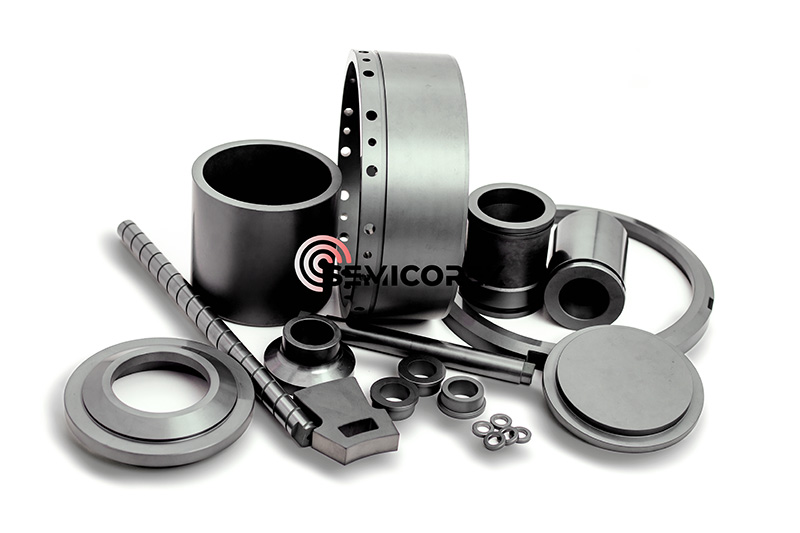
Pressureless sintering is divided into solid-phase and liquid-phase sintering: Solid-phase sintering, with the addition of B/C additives, achieves solid-phase diffusion densification at high temperatures, resulting in good high-temperature performance but grain coarsening. Liquid-phase sintering uses additives such as Al2O3-Y2O3 to form a liquid phase, lowering the temperature, resulting in finer grains and higher toughness. This technology is low-cost, allows for various shapes, and is suitable for precision structural components such as sealing rings, bearings, and bulletproof armor.
Pressureless sintering is considered the most promising sintering method for SiC. This method is adaptable to various forming processes, has lower production costs, is not limited by shape or size, and is the most common and easiest sintering method for mass production.
Pressureless sintering involves adding boron and carbon to β-SiC containing trace amounts of oxygen and sintering at around 2000℃ in an inert atmosphere to obtain a silicon carbide sintered body with 98% theoretical density. This method generally has two approaches: solid-state sintering and liquid-state sintering. Pressureless solid-state sintered silicon carbide exhibits high density and purity, and in particular, it possesses unique high thermal conductivity and excellent high-temperature strength, making it easy to process into large-sized and complex-shaped ceramic devices.
Pressureless sintered silicon carbide products: (a) ceramic seals; (b) ceramic bearings; (c) bulletproof plates
In terms of applications, pressureless sintering of SiC is simple to operate, moderately cost-effective, and suitable for the mass production of ceramic parts of various shapes. It is widely used in wear-resistant and corrosion-resistant sealing rings, sliding bearings, etc. Furthermore, pressureless sintered silicon carbide ceramics are widely used in bulletproof armor, such as for vehicle and ship protection, as well as civilian safes and armored trucks, due to their high hardness, low specific gravity, good ballistic performance, ability to absorb more energy after breakage, and low cost. As a bulletproof armor material, it exhibits excellent resistance to multiple impacts, and its overall protective effect is superior to ordinary silicon carbide ceramics. When used in lightweight cylindrical ceramic protective armor, its fracture point can reach over 65 tons, demonstrating significantly better protective performance than cylindrical ceramic protective armor using ordinary silicon carbide ceramics.
3. Recrystallized sintered SiC ceramics (R-SiC)
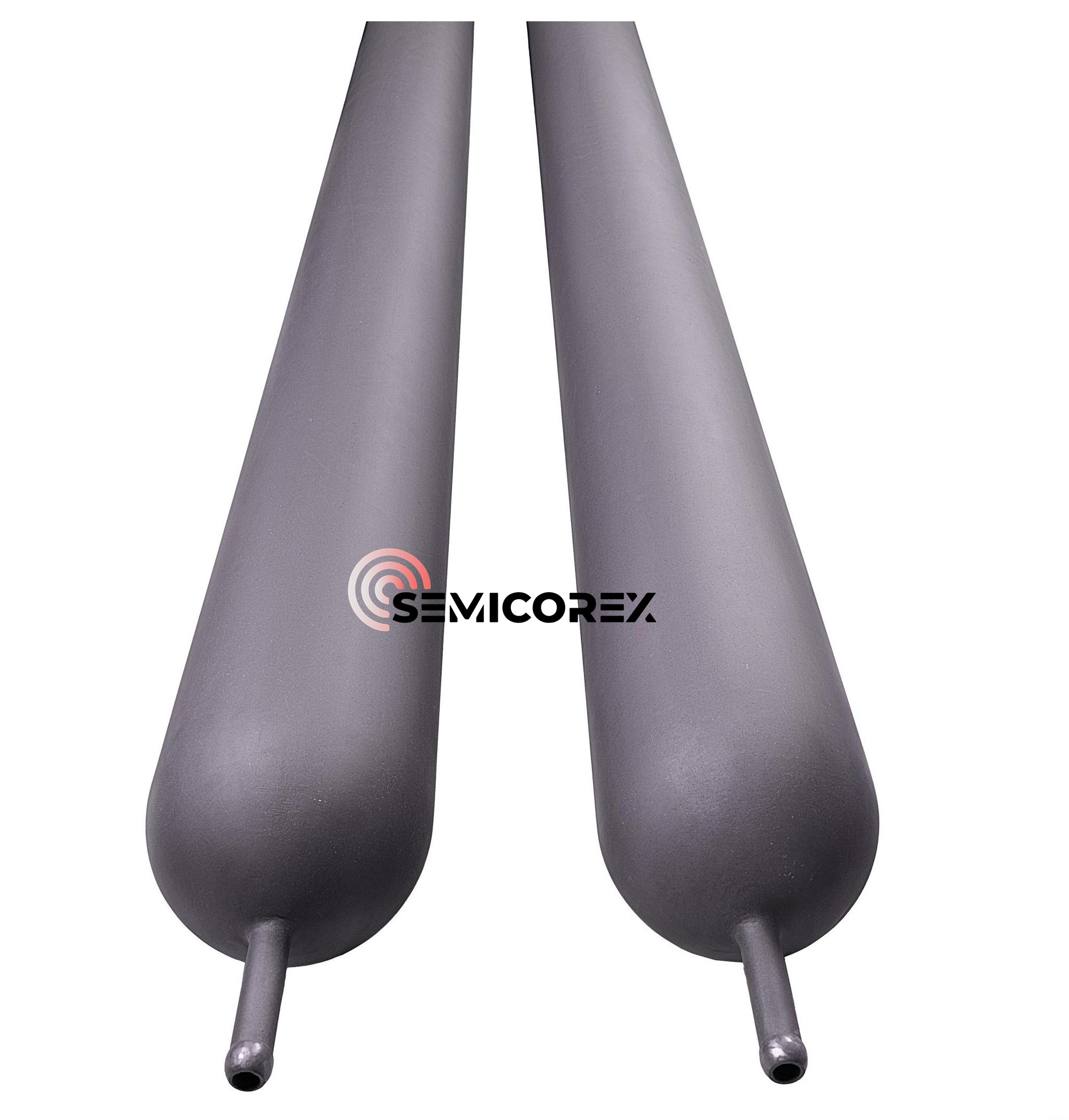
Recrystallization sintering involves graded coarse and fine SiC particles and high-temperature treatment. The fine particles evaporate and condense at the neck of the coarse particles, forming a bridging structure without grain boundary impurities. The product has a porosity of 10-20%, good thermal conductivity and thermal shock resistance, but low strength. It has no volume shrinkage and is suitable for porous kiln furniture, etc.
Recrystallization sintering technology has attracted widespread attention because it does not require the addition of sintering aids. Recrystallization sintering is the most common method for preparing ultra-high purity, large-scale SiC ceramic devices. The preparation process of recrystallized sintered SiC ceramics (R-SiC) is as follows: coarse and fine SiC powders of different particle sizes are mixed in a certain proportion and prepared into green blanks through processes such as slip casting, molding, and extrusion. Then, the green blanks are fired at a high temperature of 2200~2450 ℃ under an inert atmosphere. Finally, the fine particles gradually evaporate into a gas phase and condense at the contact points with the coarse particles, forming R-SiC ceramics.
R-SiC forms at high temperatures and has a hardness second only to diamond. It retains many of the excellent properties of SiC, such as high high-temperature strength, strong corrosion resistance, excellent oxidation resistance, and good thermal shock resistance. Therefore, it is an ideal candidate material for high-temperature kiln furniture, heat exchangers, or combustion nozzles. In the aerospace and military fields, recrystallized silicon carbide is used to manufacture structural components of aerospace vehicles, such as engines, tail fins, and fuselages. Due to its superior mechanical properties, corrosion resistance, and impact resistance, it can greatly improve the performance and service life of aerospace vehicles.
Semicorex offers customized SiC products . If you have any inquiries or need additional details, please don't hesitate to get in touch with us.
Contact phone # +86-13567891907
Email: sales@semicorex.com