- English
- Español
- Português
- русский
- Français
- 日本語
- Deutsch
- tiếng Việt
- Italiano
- Nederlands
- ภาษาไทย
- Polski
- 한국어
- Svenska
- magyar
- Malay
- বাংলা ভাষার
- Dansk
- Suomi
- हिन्दी
- Pilipino
- Türkçe
- Gaeilge
- العربية
- Indonesia
- Norsk
- تمل
- český
- ελληνικά
- український
- Javanese
- فارسی
- தமிழ்
- తెలుగు
- नेपाली
- Burmese
- български
- ລາວ
- Latine
- Қазақша
- Euskal
- Azərbaycan
- Slovenský jazyk
- Македонски
- Lietuvos
- Eesti Keel
- Română
- Slovenski
- मराठी
- Srpski језик
Semiconductor Furnace Reactor
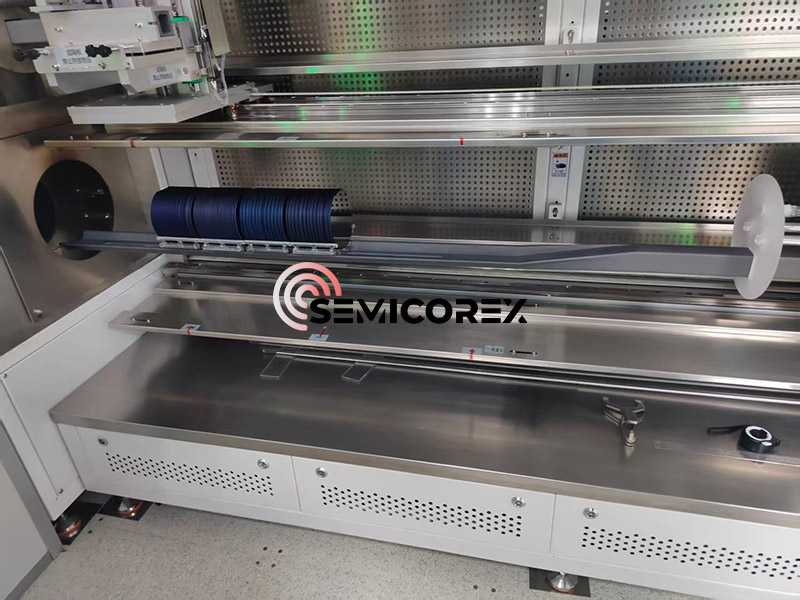
Semiconductor furnace reactors are core equipment in semiconductor manufacturing processes, primarily used for critical processes such as thermal oxidation, diffusion, annealing, and chemical vapor deposition. A typical furnace system (Horizontal/Vertical Diffusion Furnace) mainly comprises the following core components: a heating system, a temperature control system, a transport system, a gas flow control system (MFC), and a waste gas exhaust system.
From an overall architectural perspective, high-temperature furnaces are divided into horizontal and vertical types, determined by the position of the quartz tube and heating components within the system. A high-temperature furnace generally includes five basic components: a control system, a process furnace tube, a gas delivery system, a gas exhaust system, and a loading system. The control system consists of a computer connected to several microcontrollers, responsible for the precise control of the entire process.
Regarding material selection, furnace tube materials primarily include quartz (high temperature and corrosion resistant), alumina (Al₂O₃), silicon carbide (SiC), or metal alloys (such as Inconel). The heating elements of the heating system typically use resistance wires (such as Kanthal, MoSi₂), silicon carbide rods (SiC), or infrared heaters. The heating zone can be designed as a single-temperature zone or multiple-temperature zones to achieve precise temperature control. The temperature control system uses thermocouples (K-type, S-type) to monitor the temperature in real time, achieving a temperature control accuracy of ±1℃ through a PID controller, or uses PLC programmable temperature control.
Process Parameter Range and Applicable Materials
Temperature Parameter Range: The temperature range varies depending on the process. The standard heater's process temperature range is 300-1100℃, and the low-temperature furnace's is 250-500℃. Typical process temperatures are 400-1100℃, with oxidation and diffusion processes typically at 800-1100℃, LPCVD processes at 500-800℃, and annealing processes at 400-500℃.
In epitaxial growth, silicon wafers are heated in an epitaxial furnace at approximately 1200°C. Vaporized silicon tetrachloride (SiCl₄) and trichlorosilane (SiHCl₃) are added to the furnace to induce epitaxial growth on the wafer surface.
The most widely used thermal oxidation process involves a procedure performed at high temperatures of 800-1200°C to form a thin, uniform silicon dioxide layer. Thermal oxidation can be wet or dry, depending on the gases used for the oxidation reaction.
Applicable material systems: Furnace tube processes are suitable for a variety of semiconductor materials, including silicon (Si), silicon germanium (SiGe), and quartz. In SiGe processes, the CVD method is the mainstream process. By heating the silicon substrate and introducing a mixture of SiH₄ and GeH₄ gases, the silicon germanium layer decomposes and deposits at high temperatures (500-800°C), requiring precise control of the germanium doping concentration and epitaxial layer thickness.
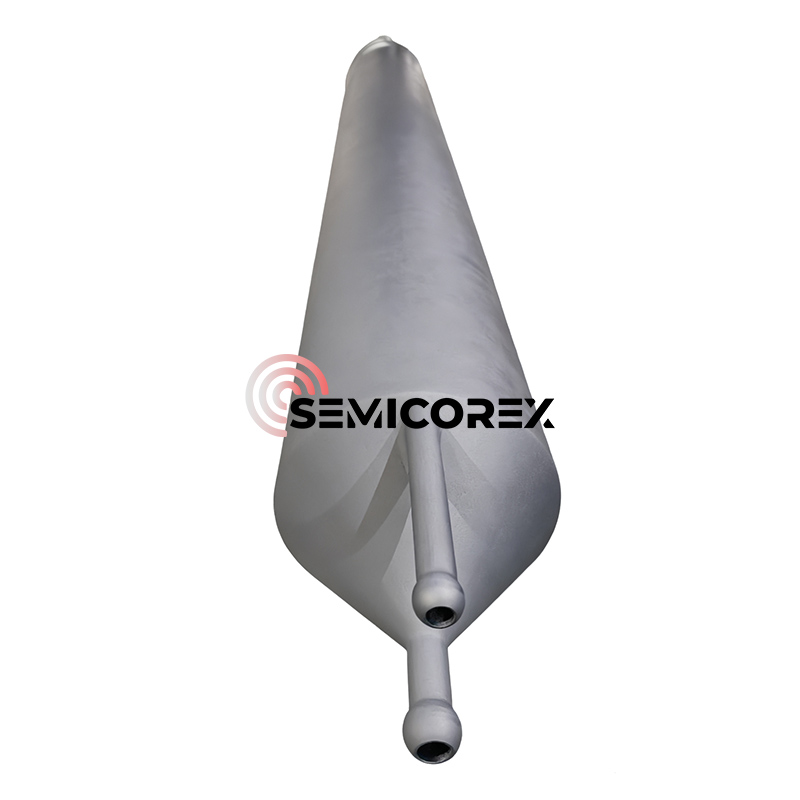
Semicorex supplies high-quality customized furnace components. Our products are engineered to deliver superior thermal stability, extended service life, and exceptional process consistency. For customized solutions or additional technical information, please feel free to contact our engineering team.
Phone: +86-13567891907
Email: sales@semicorex.com