- English
- Español
- Português
- русский
- Français
- 日本語
- Deutsch
- tiếng Việt
- Italiano
- Nederlands
- ภาษาไทย
- Polski
- 한국어
- Svenska
- magyar
- Malay
- বাংলা ভাষার
- Dansk
- Suomi
- हिन्दी
- Pilipino
- Türkçe
- Gaeilge
- العربية
- Indonesia
- Norsk
- تمل
- český
- ελληνικά
- український
- Javanese
- فارسی
- தமிழ்
- తెలుగు
- नेपाली
- Burmese
- български
- ລາວ
- Latine
- Қазақша
- Euskal
- Azərbaycan
- Slovenský jazyk
- Македонски
- Lietuvos
- Eesti Keel
- Română
- Slovenski
- मराठी
- Srpski језик
How to Select the Optimal Graphite Products for Your Application?
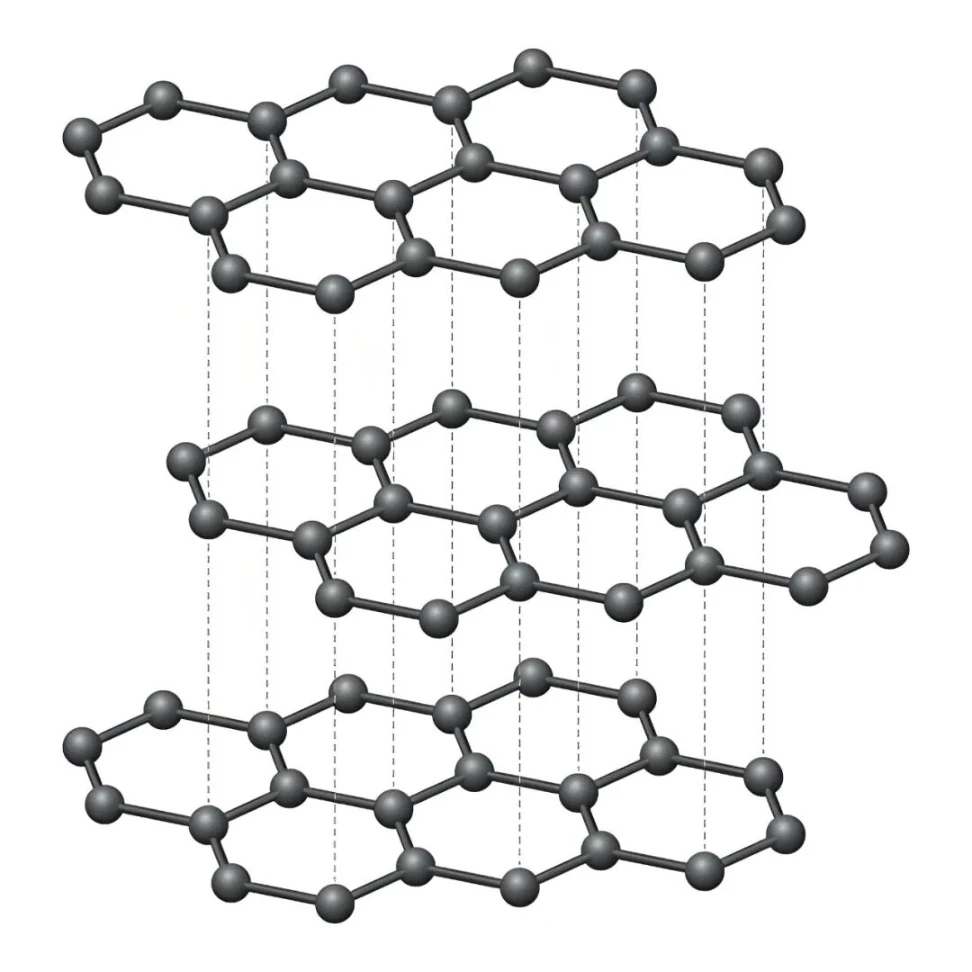
Graphite is an allotrope of carbon with a hexagonal crystal layered structure. It boasts excellent electrical conductivity, thermal conductivity, lubricity, high temperature resistance, thermal shock resistance and chemical stability, and is known as the "black gold". For these reasons, it is widely used in metallurgy, machinery, chemical engineering, photovoltaic, semiconductor, nuclear industry, national defense and aerospace industries, and has become an indispensable non-metallic material for the development of high and new technologies today.
Different application scenarios have varying performance requirements for graphite products, making precise material selection a core step in the application of graphite products. Choosing graphite components with performance matching the application scenarios can not only effectively extend their service life and reduce replacement frequency and costs, but also help improve the production quality and yield of end products.
1. Purity of Graphite Material
The purity of graphite material directly determines the durability of components. Impurities (such as Fe, Si, Al) in graphite components will form low-melting-point compounds in a high-temperature vacuum environment, which slowly erode the graphite components and lead to cracking and damage. For the application of high-precision vacuum furnaces in the semiconductor field, core components such as graphite heaters, graphite crucibles, graphite insulation cylinders and graphite carriers shall be made of high-purity graphite with a purity of 5N and above, and the ash content of the material shall be strictly controlled below 10ppm.
2. Density and Structure of Graphite Material
Density and structure are often overlooked in graphite material selection, yet these two indicators are the core factors determining the thermal shock and creep resistance of graphite components. The higher the density of graphite material, the lower the porosity of the components, the stronger their resistance to gas penetration and thermal shock, and the less likely they are to crack during use. Take isostatically pressed graphite as an example: this type of graphite has an isotropic error of less than 1% and uniform thermal expansion characteristics. Its thermal shock resistance is more than 30% higher than that of ordinary molded graphite, and its creep resistance is 3 to 5 times that of extruded graphite, making it an ideal material for vacuum furnaces subjected to frequent thermal cycles.
3. Temperature Matching
There is no need to blindly pursue high-end materials for graphite component selection. Precise material selection based on the maximum operating temperature of the vacuum furnace can not only control costs but also ensure the durability of components, achieving the maximum cost performance.
The operating temperature is below 1600℃: Ordinary high-purity graphite can be used to meet basic application requirements.
The operating temperature at 1600℃ to 2000℃: High-purity fine-grained isostatic graphite is the suitable choice, which balances durability and cost performance.
The operating temperature exceeds 2000℃: Isostatic graphite, pyrolytic graphite or C/C composites should be selected to ensure the constant performance under harsh high-temperature operating conditions.
4. Surface Treatment
Applying appropriate surface treatment to graphite components is equivalent to adding a "protective shield" to them, which can effectively resist oxidation and medium erosion and greatly extend their service life. The following are several common surface treatment methods for graphite components:
CVD SiC Coating
A uniform and dense CVD SiC coating can significantly increase the oxidation resistance temperature of graphite components, and is suitable for most graphite components of vacuum furnaces such as heaters, crucibles and insulation cylinders. This coating can effectively resist the erosion of chemical gases such as oxygen, chlorine and silicon vapor in the operating environment.
TaC Coating
Compared with CVD SiC coating, tantalum carbide coating has better corrosion resistance and high temperature resistance, and can withstand ultra-high temperature and extreme chemical corrosion environments, such as the harsh application scenarios of silicon carbide crystal growth furnaces.
Silicon Infiltration/Surface Densification
Silicon infiltration treatment is recommended for some load-bearing graphite components and C/C composites. After the treatment, the hardness, wear resistance and creep resistance of the components will be greatly improved. Resin impregnation or pyrolytic carbon treatment can also be adopted to fill the surface pores of graphite components, reduce outgassing and improve air tightness.