- English
- Español
- Português
- русский
- Français
- 日本語
- Deutsch
- tiếng Việt
- Italiano
- Nederlands
- ภาษาไทย
- Polski
- 한국어
- Svenska
- magyar
- Malay
- বাংলা ভাষার
- Dansk
- Suomi
- हिन्दी
- Pilipino
- Türkçe
- Gaeilge
- العربية
- Indonesia
- Norsk
- تمل
- český
- ελληνικά
- український
- Javanese
- فارسی
- தமிழ்
- తెలుగు
- नेपाली
- Burmese
- български
- ລາວ
- Latine
- Қазақша
- Euskal
- Azərbaycan
- Slovenský jazyk
- Македонски
- Lietuvos
- Eesti Keel
- Română
- Slovenski
- मराठी
- Srpski језик
What are the LPCVD Processes?
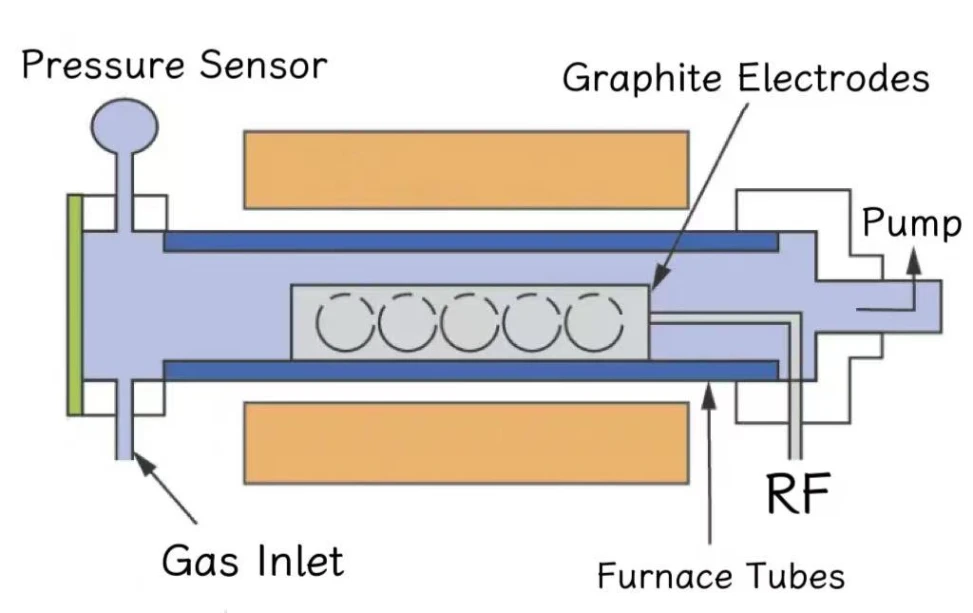
Low pressure chemical vapor deposition (LPCVD) processes are the CVD techniques that deposit thin film materials on wafer surfaces under low pressure environments. LPCVD processes are widely used in material deposition technologies for semiconductor manufacturing, optoelectronics, and thin-film solar cells.
The reaction processes of LPCVD are typically carried out in a low-pressure reaction chamber, usually at a pressure of 1–10 Torr. After the wafer is heated to the temperature range suitable for the deposition reaction, gaseous precursors are introduced into the reaction chamber for deposition. The reactive gases diffuse to the wafer surface and then undergo chemical reactions on the wafer surface at high temperature conditions to form solid deposits (thin films).
Advantages of LPCVD processes
1.High-quality thin film deposition quality
The transport rate of the reactant gases is sped up when the pressure is low because the diffusion coefficient of the gases increases. Thus, a more uniform distribution of gas molecules can be created throughout the reaction chamber, which ensures that gas molecules fully react with the wafer surface and significantly reduces voids or thickness differences caused by incomplete reactions.
2.Excellent this film step coverage
The enhanced gas diffusion capability under low pressure allows it to penetrate deep into complex structures. This ensures that the reactive gas is in full contact with the steps and trenches on the wafer surface, achieving uniform deposition of thin films. As a result, thin film deposition on intricate structures is a good application for the LPCVD method.
3.Strong operational controllability
LPCVD processes exhibit strong controllability during actual operation. The composition, structure, and thickness of the thin film can be precisely controlled by adjusting reactant gas parameters like type, flow rate, temperature, and pressure. LPCVD equipment has relatively low investment and operating costs in comparison to other deposition technologies, making it suitable for the large-scale industrial production. And the consistency in processes during mass production can effectively be ensured with automated systems that monitor and adjust in real time.
Disadvantages of LPCVD processes
Since LPCVD processes are typically performed at high temperatures, which limits the application of some temperature-sensitive materials, wafers that need to be processed by LPCVD must be heat-resistant. During LPCVD processes, the unwanted issues may arise, such as wafer wrap-around deposition (thin films deposited in non-target areas of the wafer) and difficulties with in-situ doping, which require subsequent processing to resolve. In addition, the low concentration of vapor precursors under low pressure conditions may lead to a lower thin film deposition rate, thereby resulting in inefficient production efficiency.
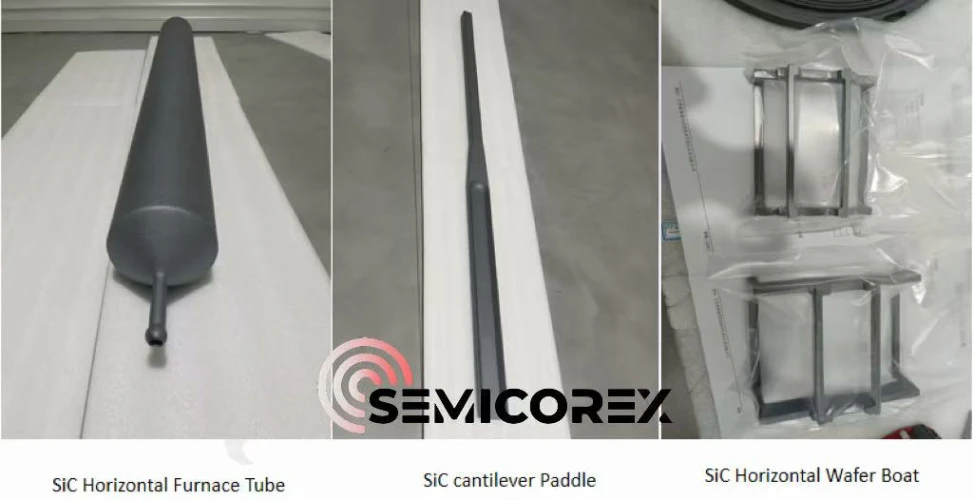
Semicorex offers high-quality SiC furnace tubes, SiC cantilever paddles and SiC wafer boats for LPCVD processes . If you have any inquiries or need additional details, please don't hesitate to get in touch with us.
Contact phone # +86-13567891907
Email: sales@semicorex.com