
- English
- Español
- Português
- русский
- Français
- 日本語
- Deutsch
- tiếng Việt
- Italiano
- Nederlands
- ภาษาไทย
- Polski
- 한국어
- Svenska
- magyar
- Malay
- বাংলা ভাষার
- Dansk
- Suomi
- हिन्दी
- Pilipino
- Türkçe
- Gaeilge
- العربية
- Indonesia
- Norsk
- تمل
- český
- ελληνικά
- український
- Javanese
- فارسی
- தமிழ்
- తెలుగు
- नेपाली
- Burmese
- български
- ລາວ
- Latine
- Қазақша
- Euskal
- Azərbaycan
- Slovenský jazyk
- Македонски
- Lietuvos
- Eesti Keel
- Română
- Slovenski
- मराठी
- Srpski језик
Market development of carbon ceramic materials
Carbon-ceramic composites have seen one of the fastest-growing areas of demand in the high-end equipment manufacturing sector in recent years. Essentially, carbon-ceramic composites introduce a silicon silicide ceramic phase into a carbon fiber-reinforced carbon matrix, constructing a multiphase composite structure of "carbon + ceramic" through methods such as chemical vapor deposition or liquid-phase reaction sintering. This structure retains the low density, high-temperature resistance, and thermal shock resistance of carbon materials while overcoming the shortcomings of pure carbon materials, such as weak oxidation resistance and insufficient wear resistance. This results in longer lifespan and more stable performance under extreme conditions such as high-temperature friction, high load, and high-frequency cycling. Due to these comprehensive performance advantages, carbon-ceramic is considered an important candidate material for next-generation high-performance friction systems and high-temperature structural components.
For a long time, the application of carbon-ceramic materials has been mainly concentrated in high-end applications such as aerospace and racing braking systems. Its high price, complex processes, and limited production capacity have hindered its penetration into larger-scale industrial markets. However, with the improvement of domestic high-end manufacturing capabilities and cost control, this material is gradually crossing the threshold between "laboratory materials" and "engineering materials," and is beginning to enter broader industrial fields such as rail transportation, new energy equipment, and semiconductor manufacturing.
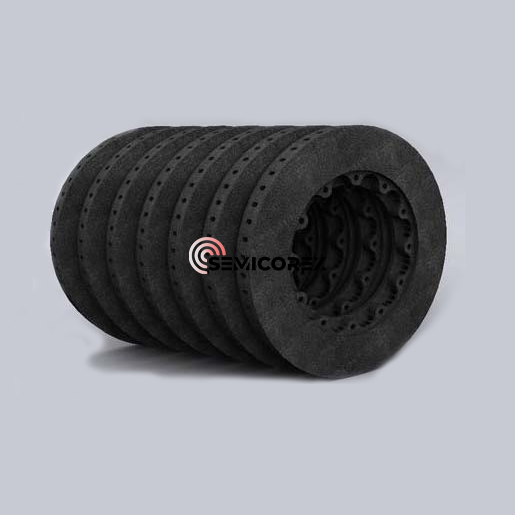
In the global carbon-ceramic composite material supply system, Brembo SGL Carbon Ceramic Brakes (BSCCB), a joint venture between Italy's Brembo S.p.A. and Germany's SGL Carbon, holds a certain market share globally thanks to its years of R&D and mass production capabilities in luxury and high-performance automotive braking systems. Surface Transforms plc of the UK has a strong position in the racing and high-performance segments. Other suppliers include AP Racing and Japan's AKEBONO.
Compared to traditional metal brake discs, carbon-ceramic materials significantly reduce weight while maintaining the same strength, while possessing higher heat capacity and better resistance to heat fade, maintaining a stable coefficient of friction even under high-speed braking and frequent start-stop conditions. This combined effect of lightweighting and high reliability is of practical significance for rail transit systems that prioritize energy conservation, emission reduction, and operational safety, making carbon-ceramic brakes a key component of next-generation high-end trains.
Carbon-ceramic materials also have broad growth potential in the passenger car market. As high-end new energy vehicles and performance cars increasingly demand lightweighting and braking stability, carbon-ceramic brake discs are gradually penetrating from supercars into luxury and high-performance models. Lighter unsprung mass improves handling response, while longer service life translates to lower total lifecycle maintenance costs. With increased production capacity and mature manufacturing processes, the unit cost of carbon-ceramic brake discs is gradually decreasing. Once the cost curve crosses a critical inflection point, the automotive market may become one of the largest application scenarios for carbon-ceramic materials.
Beyond transportation equipment, high-temperature manufacturing industries such as photovoltaics and semiconductors are also reshaping the demand structure for carbon-ceramic materials. In photovoltaic crystal pulling and heat treatment processes, thermal field structural components need to operate for extended periods in high-temperature environments, requiring extremely high levels of heat resistance, thermal shock resistance, and dimensional stability. While traditional graphite materials possess some temperature resistance, they face limitations in strength and lifespan. Carbon-ceramic materials, with their superior oxidation resistance and mechanical properties, can extend equipment lifespan and reduce replacement frequency, gradually becoming the upgrade direction for high-end thermal field equipment. As photovoltaic production lines evolve towards larger sizes and higher efficiency, the performance requirements for thermal field materials are further increasing, opening up new incremental markets for carbon-ceramic companies.
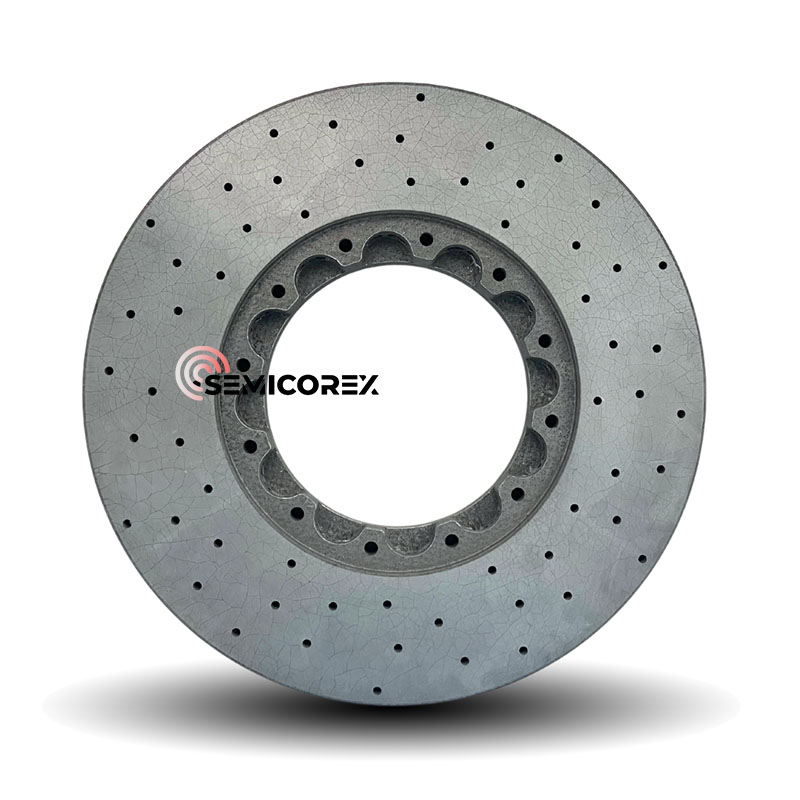
The semiconductor sector is another typical high-barrier market. Crystal growth, epitaxy, and high-temperature heat treatment processes require a large amount of high-purity, high-temperature resistant, and low-pollution structural and container materials. Carbon-ceramic composite materials possess unique advantages in thermal stability and mechanical strength, making them suitable for crucibles and related high-temperature components. As domestic semiconductor manufacturing capabilities continue to improve, the importance of localized high-end material supply is constantly increasing. Shixin New Materials' focus on semiconductors is a natural choice in line with the trend of domestic substitution in the industrial chain.
From the perspective of industry development, carbon-ceramic composite materials are undergoing a phase of diffusion from "verification scenarios" to "large-scale applications." Rail transit has completed reliability testing first, passenger vehicles are entering a configuration upgrade window, and photovoltaics and semiconductors are proposing higher-level material standards in high-temperature manufacturing processes. The concentrated release of demand from different end markets at the same time means that carbon-ceramic materials are no longer limited to a single track, but exhibit a characteristic of parallel penetration across multiple industries. For material companies, this diversified scenario means that product forms, process routes, and production capacity organization methods need to evolve simultaneously, shifting from supplying single brake discs or single components to providing more complete high-temperature structural component solutions and systematic supporting capabilities.
Against this backdrop, Semicorex's strategic logic has become increasingly clear: on the one hand, it solidifies its technological and certification barriers in high-barrier markets such as rail transportation, creating a demonstration effect; on the other hand, it replicates its carbon-ceramic capabilities to emerging fields such as passenger vehicles, photovoltaic thermal fields, and semiconductors, following the two main lines of lightweighting and high-temperature manufacturing. As downstream equipment upgrades continue, the "presence" of carbon-ceramic materials in more key components will continue to increase, and its role will gradually evolve from a single-point replacement material to a fundamental supporting material in high-end manufacturing systems. This change is quietly reshaping the competitive landscape of China's high-performance composite materials industry and opening up greater growth opportunities for companies with engineering capabilities.
Semicorex offers high-quality carbon ceramic products. If you have any inquiries or need additional details, please don't hesitate to get in touch with us.
Contact phone # +86-13567891907
Email: sales@semicorex.com