
- English
- Español
- Português
- русский
- Français
- 日本語
- Deutsch
- tiếng Việt
- Italiano
- Nederlands
- ภาษาไทย
- Polski
- 한국어
- Svenska
- magyar
- Malay
- বাংলা ভাষার
- Dansk
- Suomi
- हिन्दी
- Pilipino
- Türkçe
- Gaeilge
- العربية
- Indonesia
- Norsk
- تمل
- český
- ελληνικά
- український
- Javanese
- فارسی
- தமிழ்
- తెలుగు
- नेपाली
- Burmese
- български
- ລາວ
- Latine
- Қазақша
- Euskal
- Azərbaycan
- Slovenský jazyk
- Македонски
- Lietuvos
- Eesti Keel
- Română
- Slovenski
- मराठी
- Srpski језик
How are Semiconductor Quartz Furnace Tubes Manufactured?
Semiconductor quartz furnace tubes are essential components widely used in the main semiconductor manufacturing processes, such as diffusion, oxidation, and annealing. It needs to stably maintain physical and chemical properties even when it needs to be prolongedly exposed to the high temperature, intense pressure, and severe corrosion of the operating environment. In the semiconductor manufacturing process, the quartz furnace tube’s quality directly affects the performance and yield of semiconductor devices. For this reason, the manufacturing process of quartz furnace tubes is crucial.
The main manufacturing processes of quartz furnace tubes
1. Raw material selecting
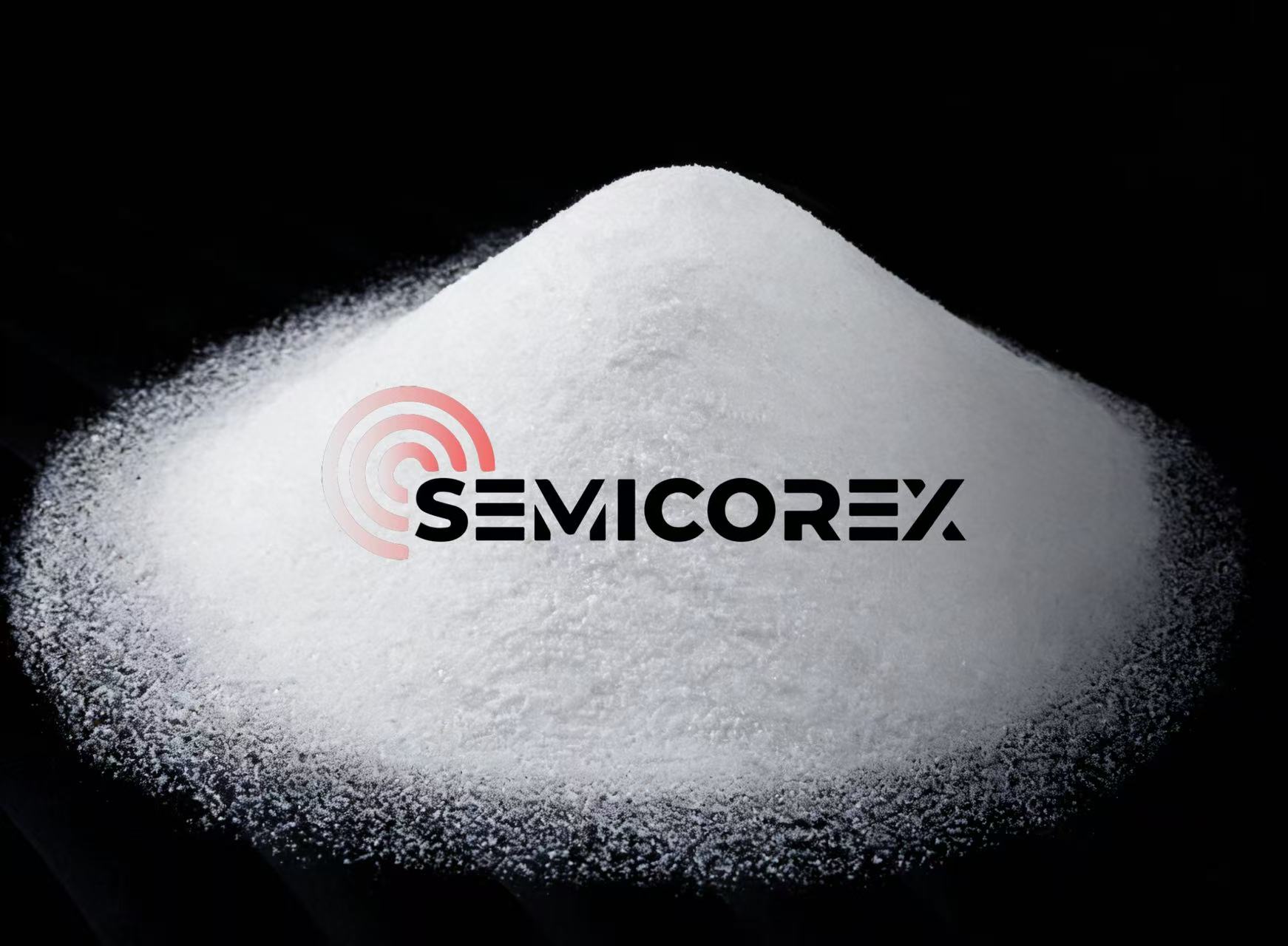
Quartz furnace tubes are primarily made from high-purity silicon dioxide, which is available in both natural and synthetic forms. High-purity raw materials are essential to deliver excellent optical, thermal, and chemical performance of quartz furnace tubes. Especially in high-precision fields like semiconductors, the requirements for the content of impurities, particularly metal ion impurities (such as iron, aluminum, sodium, etc.), in raw materials are extremely stringent and must be controlled at the ppm level.
2. Melting and molding
Selected quartz powder or lumps are melted in the high-temperature furnace at above 2000°C to form a uniform fused quartz liquid. Precise temperature control and a specific atmospheric environment (such as a vacuum or inert gas) are crucial during this process to effectively prevent oxidation and contamination-induced defects. The fused quartz liquid is then continuously formed into tubes using specialized drawing equipment or molds like tube drawing machines.
3. Cutting and end-face finishing
Shaped quartz tubes are typically cut to the required length via cutting equipment such as diamond cutters or laser cutters. The tube cut ends tend to be rough, so fine grinding is needed to ensure surface smoothness and flatness. Mechanical polishing or chemical polishing processes are usually adopted to remove cutting-induced burrs and microcracks, which can enable the tube ends to meet high-precision flatness standards and satisfy the vacuum-sealing requirements of semiconductor processes.
4. Welding assembly
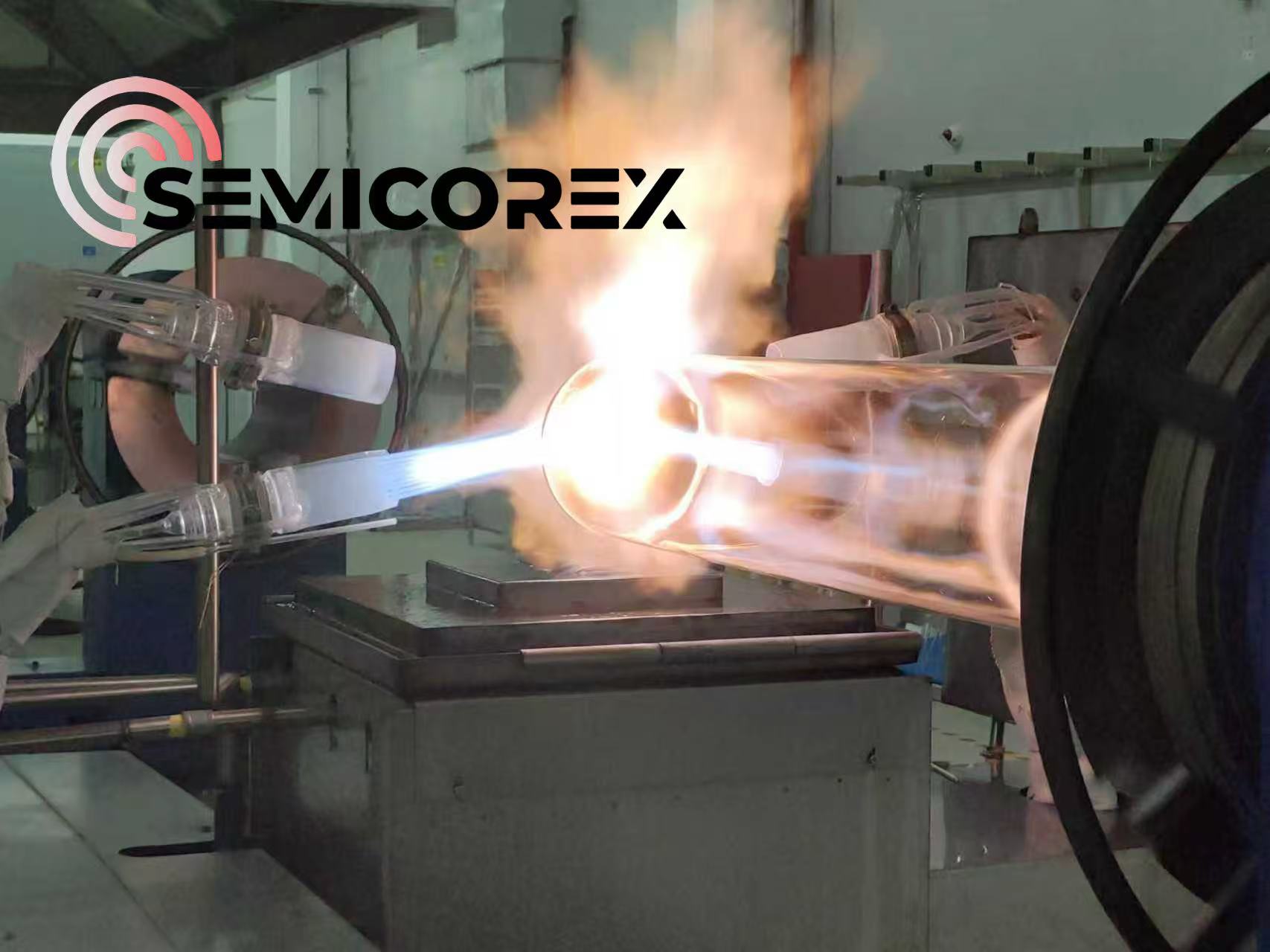
The cut quartz tubes need to be welded at high temperature with the furnace core tubes, flanges, and exhaust pipes for assembly to match the customer's customized drawings. Following welding assembly, the white oxide layer of the quartz tube needs to be removed through high-temperature polishing. This layer is generated during the cooling process after the quartz tube is fused at high temperatures. While harmless in itself, it affects the light transmittance, flatness, and smoothness of the quartz product. High-temperature polishing can effectively remove the oxide layer, resulting in transparent and clean tubes.
5. Annealing treatment
Internal stress is generated in quartz tubes after shaping, cutting, welding assembly, and polishing processes, which can affect their mechanical strength and thermal stability. Thus, all high-temperature-fabricated quartz parts need to undergo heat treatment and annealing to eliminate such internal stress.
6. Quality inspecting
In the entire manufacturing process of quartz furnace tubes, strict multi-aspect testing is required to ensure that the finished product meets standards. Inspections include internal stress (checked by polarized light for obvious stress lines), dimensional accuracy (such as tolerance control for outer diameter, wall thickness, and length), surface quality (roughness, presence of defects, etc.), mechanical properties (strength, hardness, etc.), and cleanliness (free inner wall of impurities and bubbles).