
- English
- Español
- Português
- русский
- Français
- 日本語
- Deutsch
- tiếng Việt
- Italiano
- Nederlands
- ภาษาไทย
- Polski
- 한국어
- Svenska
- magyar
- Malay
- বাংলা ভাষার
- Dansk
- Suomi
- हिन्दी
- Pilipino
- Türkçe
- Gaeilge
- العربية
- Indonesia
- Norsk
- تمل
- český
- ελληνικά
- український
- Javanese
- فارسی
- தமிழ்
- తెలుగు
- नेपाली
- Burmese
- български
- ລາວ
- Latine
- Қазақша
- Euskal
- Azərbaycan
- Slovenský jazyk
- Македонски
- Lietuvos
- Eesti Keel
- Română
- Slovenski
- मराठी
- Srpski језик
What are The Silicon Carbide Ceramic Membranes?
Standing out as the top-tier filtration and purification technologies, silicon carbide ceramic membranes are considered the preferred material for addressing complex wastewater treatment challenges. Silicon carbide ceramic membranes deliver exceptional performance that makes them the unparalleled solution for filtration and purification tasks in harsh environments involving high temperature, strong corrosion, and heavy pollution.
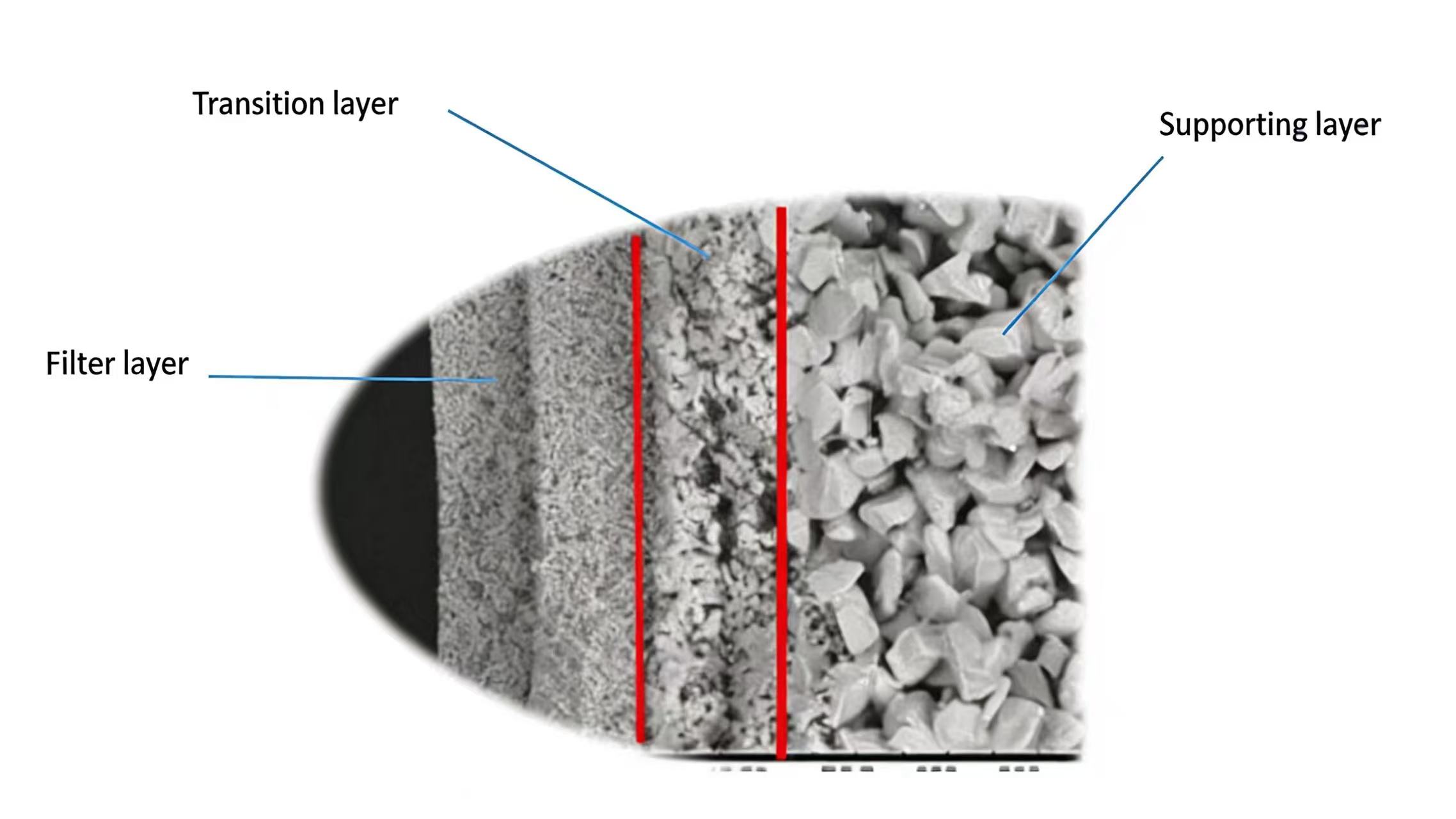
Silicon carbide ceramic membranes are high-performance inorganic ceramic filtration membranes with an asymmetric porous structure. Manufactured by the special sintering techniques, silicon carbide ceramic membranes form a unique gradient pore structure, consisting of the filtration layer, the transition layer, and the supporting layer. This gradient pore structure enables silicon carbide ceramic membranes to achieve highly efficient interception and removal of impurities with different particle sizes, perfectly meeting purchasers’ requirements for different filtration precisions such as microfiltration, ultrafiltration, and nanofiltration.
Main types of silicon carbide ceramic membranes
1. Tubular silicon carbide ceramic membrane
2. Flat silicon carbide ceramic membrane
3. Multichannel silicon carbide ceramic membrane
The advantages of silicon carbide ceramic membranes
1. hydrophilic and oleophobic
2. High flux performance
3. Superior high temperature resistance
4. Strong chemical corrosion resistance
5. Remarkable safety performance
6. Exceptional cleanability and maintainability
7. Long lifespan
8. Excellent economic efficiency
The applications of silicon carbide ceramic membranes
1. Water treatment and wastewater recycling
They are widely used in the municipal wastewater treatment, drinking water purification, and seawater desalination treatment.
2. Oil-water separation treatment
They are adapted to the treatment of oily wastewater from industries such as petrochemicals, machinery processing, and food processing.
3. Gas separation treatment
They are will-suited for hydrogen recovery, nitrogen recovery, acid gas treatment, and greenhouse gas capture in oil refineries.
4. High-temperature flue gas purification
They are widely applied in the high-temperature flue gas dust removal in industries such as coal-fired power plants, steel plants, cement plants, and waste incineration plants.
5. Biotechnology and pharmaceutical fields
They are utilized in the biopharmaceutical processes for fermentation broth clarification, cell/debris removal, protein separation and purification, sterilization, and pyrogen removal.
6. Applications in specialized fields
They paly an important roles in the molten metal filtration, radioactive waste treatment, and high-temperature reaction-separation coupling processes.
Previous:What is the Dry Gas Seal System?