
- English
- Español
- Português
- русский
- Français
- 日本語
- Deutsch
- tiếng Việt
- Italiano
- Nederlands
- ภาษาไทย
- Polski
- 한국어
- Svenska
- magyar
- Malay
- বাংলা ভাষার
- Dansk
- Suomi
- हिन्दी
- Pilipino
- Türkçe
- Gaeilge
- العربية
- Indonesia
- Norsk
- تمل
- český
- ελληνικά
- український
- Javanese
- فارسی
- தமிழ்
- తెలుగు
- नेपाली
- Burmese
- български
- ລາວ
- Latine
- Қазақша
- Euskal
- Azərbaycan
- Slovenský jazyk
- Македонски
- Lietuvos
- Eesti Keel
- Română
- Slovenski
- मराठी
- Srpski језик
Sintering of Alumina Ceramics
In modern materials science and engineering, materials can be divided into three main categories: metals, organic polymers, and ceramics. Among them, alumina ceramics, due to their excellent comprehensive properties, have become one of the most widely produced and applied advanced ceramics. They possess high mechanical strength (flexural strength up to 300-400 MPa), high resistivity (10¹⁴-10¹⁵ Ω·cm), excellent insulation properties, high hardness (Rockwell hardness HRA80-90), high melting point (approximately 2050℃), excellent corrosion resistance and chemical stability, and also exhibit specific optical properties and ionic conductivity. For these reasons, alumina ceramics are widely used in many high-tech fields, including machinery manufacturing (such as wear-resistant parts and cutting tools), electronics and power (integrated circuit substrates, insulating shells), chemical industry (corrosion-resistant reactor linings), biomedicine (artificial joints, dental implants), construction engineering (bulletproof armor, special glass), and aerospace (high-temperature windows, radomes).
In the preparation process of alumina ceramics, each step—raw material processing, forming, sintering, and subsequent processing—is crucial. Currently, sintering is the mainstream process for preparing alumina ceramics. This process involves high-temperature treatment to densify the green body, promote grain growth, and evolve porosity, forming the final microstructure. Once sintering is complete, the microstructure and properties of the material are essentially determined, making it extremely difficult to modify through subsequent processes. Therefore, in-depth research into the sintering mechanism and key influencing factors—such as the characteristics of raw material particles and the selection of sintering aids—is of significant theoretical and engineering value for optimizing the properties of alumina ceramics and broadening their application range.
1. Introduction to Alumina Ceramics
Alumina (Al₂O₃) is one of the most commonly used raw materials in advanced ceramics. Based on Al₂O₃ content, it can be divided into high-purity (≥99.9%) and ordinary (75%–99%) types. High-purity alumina ceramics have extremely high sintering temperatures (1650–1990℃) and can transmit 1–6 μm infrared light, commonly used in sodium lamps, platinum-platinum crucibles, integrated circuit substrates, and high-frequency insulating components. Alumina is classified into several types based on its Al₂O₃ content, including 99%, 95%, 90%, and 85%. 99% alumina is used in high-temperature crucibles, ceramic bearings, and wear-resistant seals; 95% alumina is suitable for corrosion-resistant and wear-resistant environments; and 85% alumina, due to the addition of talc, has optimized electrical properties and mechanical strength, making it suitable for vacuum electronic device packaging.
Alumina exists in various crystal forms (allotropic crystals), the most common being α-Al₂O₃, β-Al₂O₃, and γ-Al₂O₃. α-Al₂O₃ (corundum structure) is the most stable form, belonging to the trigonal crystal system, and is the only naturally occurring stable alumina crystal form (like corundum and ruby). It is renowned for its high hardness, high melting point, excellent chemical stability, and dielectric properties, and is the foundation for preparing high-performance alumina ceramics.
2. Sintering of Alumina Ceramics
Sintering refers to the process of heating powder or pressed compacts at a temperature below the melting point of their main components and then cooling them appropriately to obtain dense polycrystalline materials. This process allows for particle neck growth through diffusion, grain boundary migration, and the elimination of pores, ultimately resulting in high-density, high-performance ceramic materials. The driving force comes from the tendency of the system's surface energy to decrease—ultrafine powders have high specific surface area and high surface energy, and during sintering, particle bonding and porosity reduction lead to thermodynamic stability of the system.
Based on the presence or absence of a liquid phase, sintering can be divided into solid-phase sintering and liquid-phase sintering. Oxides such as Al₂O₃ and ZrO₂ can often be densified through solid-phase sintering; while covalent ceramics such as Si₃N₄ and SiC require sintering aids to form a liquid phase to promote sintering. Liquid-phase sintering includes three stages: particle rearrangement, dissolution-precipitation, and solid-phase framework formation. An appropriate liquid phase can promote densification, but excessive liquid phase may lead to abnormal grain growth.
The sintering process mainly includes three stages: Initial stage: Particle rearrangement, contact points form necks, and pores become interconnected; Middle stage: Grain boundaries form and move, pores gradually close, and density significantly increases; Later stage: Grains continue to grow, and isolated pores gradually disappear or remain at the grain boundaries.
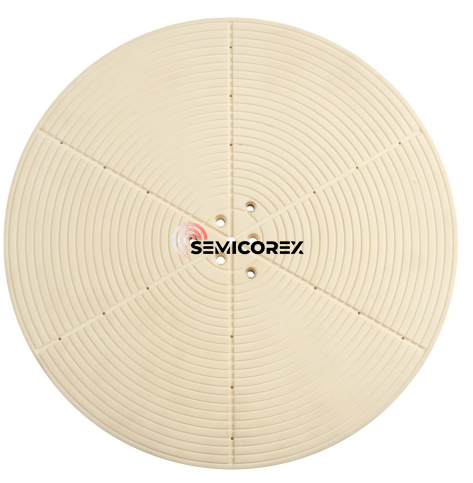
Semicorex offers customized Alumina ceramic products . If you have any inquiries or need additional details, please don't hesitate to get in touch with us.
Contact phone # +86-13567891907
Email: sales@semicorex.com