
- English
- Español
- Português
- русский
- Français
- 日本語
- Deutsch
- tiếng Việt
- Italiano
- Nederlands
- ภาษาไทย
- Polski
- 한국어
- Svenska
- magyar
- Malay
- বাংলা ভাষার
- Dansk
- Suomi
- हिन्दी
- Pilipino
- Türkçe
- Gaeilge
- العربية
- Indonesia
- Norsk
- تمل
- český
- ελληνικά
- український
- Javanese
- فارسی
- தமிழ்
- తెలుగు
- नेपाली
- Burmese
- български
- ລາວ
- Latine
- Қазақша
- Euskal
- Azərbaycan
- Slovenský jazyk
- Македонски
- Lietuvos
- Eesti Keel
- Română
- Slovenski
- मराठी
- Srpski језик
Why Apply CVD SiC Coating to Graphite Susceptors?
The third-generation semiconductor industry is undergoing rapid capacity expansion. Silicon carbide (SiC) and gallium nitride (GaN) epitaxy processes keep evolving toward high-temperature operating environments, ultra-high-purity raw materials and miniaturized chip devices. Nevertheless, conventional uncoated graphite susceptors exposed to harsh high-temperature and highly corrosive working conditions tend to trigger critical pain points including process contamination, short service life and frequent equipment shutdowns, continuously restricting production line efficiency and chip yield. To address these industry challenges, CVD silicon carbide coating solutions, with exclusive material performance merits, have become the optimal choice for advanced MOCVD and MBE epitaxy production lines.
Major Drawbacks of Uncoated Graphite Susceptors in Advanced Manufacturing
Semiconductor epitaxy manufacturing operates under extreme working conditions. SiC and GaN epitaxy processes require stable high temperatures ranging from 1000 °C to 1600 °C. Graphite susceptors are continuously exposed to highly reactive gases such as hydrogen, ammonia and hydrogen chloride, leading to three irreversible problems:
1. Particle-induced contamination
Unprotected graphite susceptors feature abundant pores. Under high temperatures, they are susceptible to gas erosion and surface spalling, generating fine particles. Once these particles attach to epitaxial layers, they create high-density defects and drastically lower the yield of power devices and optoelectronic chips. Current industry purity standards have been raised to 7N (99.99999%); trace impurities will cause device leakage and degraded optoelectronic performance.
2. Rapid aging of graphite components
Bare graphite susceptors lack chemical corrosion resistance. Long-term exposure to corrosive atmospheres causes oxidative wear, accelerating the degradation of components such as susceptors, heat insulation barrels and flow guide sleeves, which results in continuously rising consumable procurement expenses. Moreover, the aging rate for graphite susceptors has no unified standard, which makes it impossible to accurately predict the replacement time of susceptors, easily disrupting production schedules.
Mechanism and Advantages of CVD Silicon Carbide Coating
Graphite materials have excellent thermal conductivity and superior machinability, making them the ideal options for epitaxy susceptors. However, its inherent chemical reactivity flaws cannot be eliminated, limiting its applicability in high-temperature, highly corrosive epitaxy environments. Chemical Vapor Deposition (CVD) silicon carbide coating technology solves the interface compatibility conflict between graphite susceptors and extreme process environments fundamentally via material modification.
Within a sealed reaction chamber, the CVD process precisely controls gas-phase reactions. Silicon-carbon precursor gases decompose under accurately regulated temperatures, depositing silicon carbide crystals at the atomic level on graphite substrates to form a seamless, fully dense hermetic protective layer. Atomic bonding forms between the coating and substrate, which blocks the penetration of corrosive gases and traps internal graphite impurities, while fully retaining the substrate’s strengths of high thermal conductivity and uniform temperature distribution. The composite structure balances outstanding protection and stable thermal field performance.
What Makes Semicorex CVD SiC Coating Solutions Stand Out?
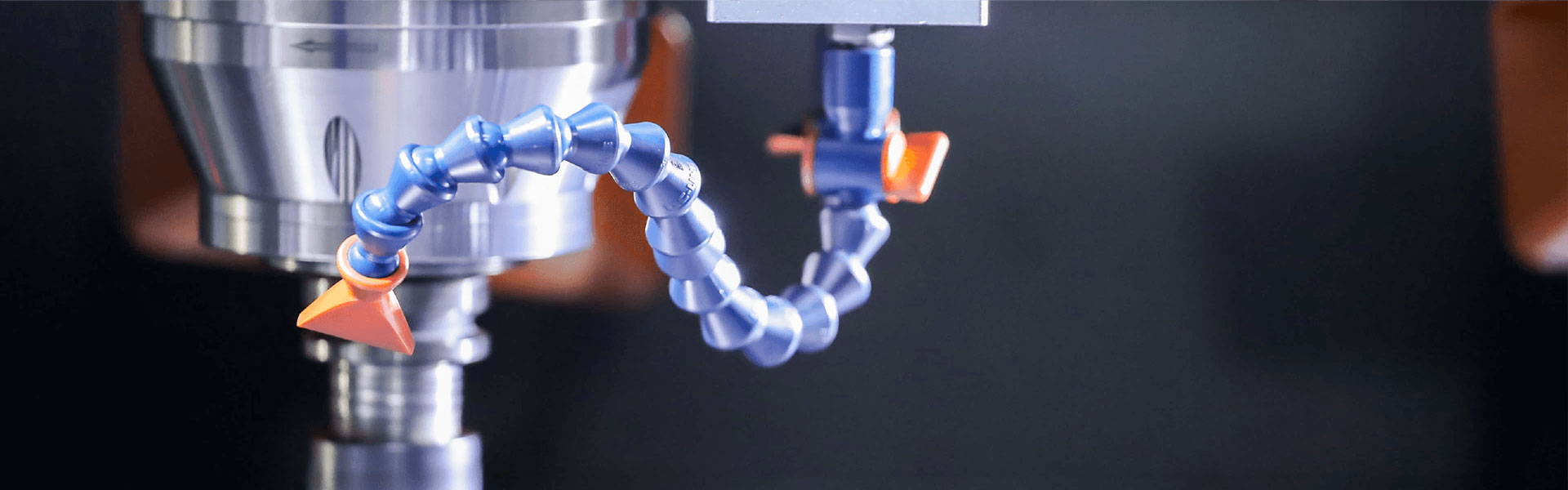
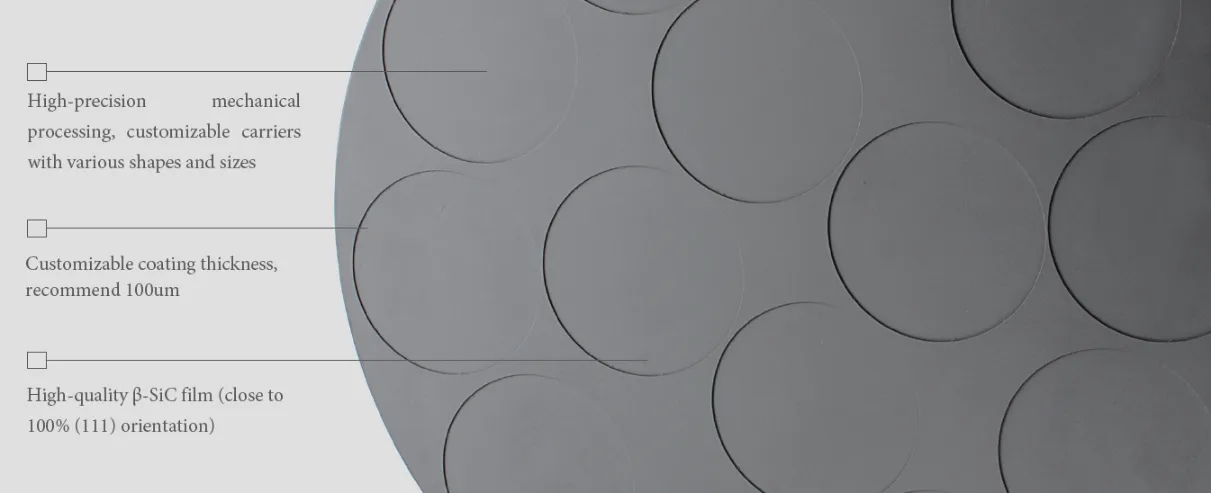
CVD silicon carbide coated graphite susceptors are not merely a simple coating treatment, but a complete integrated engineering workflow that strictly controls dimensional accuracy, coating quality and equipment compatibility throughout all stages. As a leading domestic manufacturer in China, Semicorex is dedicated to delivering stable, long-lasting and cost-effective CVD silicon carbide coating solutions for customers. Semicorex uses precision CNC equipment to process graphite substrates, strictly controlling their shape contour, dimensional tolerances, base flatness, and groove positioning accuracy, to eliminate secondary issues caused by insufficient processing precision. For different operating conditions and usage needs, Semicorex’s technical team provides customized coating solutions to ensure high compatibility between the coating and the substrate, effectively preventing coating cracking and peeling failure caused by frequent thermal cycling. Once the CVD SiC coating is finished, Semicorex will conduct a full-spectrum coating defect inspection to ensure the coating is intact, dense, and free of any defects, thus guaranteeing the stability of the CVD silicon carbide-coated graphite tray on the machine.
Previous:Silicon Carbide Wafer Boat