
- English
- Español
- Português
- русский
- Français
- 日本語
- Deutsch
- tiếng Việt
- Italiano
- Nederlands
- ภาษาไทย
- Polski
- 한국어
- Svenska
- magyar
- Malay
- বাংলা ভাষার
- Dansk
- Suomi
- हिन्दी
- Pilipino
- Türkçe
- Gaeilge
- العربية
- Indonesia
- Norsk
- تمل
- český
- ελληνικά
- український
- Javanese
- فارسی
- தமிழ்
- తెలుగు
- नेपाली
- Burmese
- български
- ລາວ
- Latine
- Қазақша
- Euskal
- Azərbaycan
- Slovenský jazyk
- Македонски
- Lietuvos
- Eesti Keel
- Română
- Slovenski
- मराठी
- Srpski језик
What is mechanical Seal
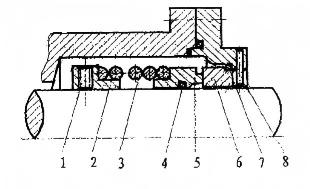
A mechanical seal is an axial end-face sealing device that relies on an elastic element to pre-tighten the sealing pair. Under the combined pressure of the medium and the elastic element, the sealing pair is compressed to achieve a seal. Its structure is shown in Figure 1. There are two types of sealing rings: dynamic rings and stationary rings, which are the most important components of a mechanical seal. The working condition of the sealing rings determines the performance and lifespan of the mechanical seal, and the performance of the sealing ring material directly affects its working condition. Therefore, understanding the performance requirements of sealing materials for mechanical seals and selecting suitable sealing materials is crucial to ensuring the safe operation of mechanical seals.
To ensure the normal operation of the sealing rings in a mechanical seal device, considering factors such as friction reduction, corrosion resistance, and prevention of seizing, the sealing rings are often configured as a pair of hard and soft rings with different hardnesses. Usually, the hard ring is the dynamic ring. The performance requirements for the hard ring material are as follows:
1) Sufficient Strength and Rigidity: The sealing ring should not be damaged under operating conditions (such as pressure, temperature, and sliding speed), and deformation should be minimized. It should maintain sealing performance even under fluctuating operating conditions.
2) Good Tribological Properties: During operation, the end faces of the sealing ring are always in contact and rotating. Therefore, the sealing ring material must have good wear resistance and maintain good lubrication performance of the fluid film and good boundary lubrication performance to ensure a satisfactory service life under operating conditions.
3) Good Thermal Conductivity, Heat Resistance, and Thermal Shock Resistance: During operation, due to poor lubrication conditions between the sealing surfaces and the temperature of the sealing fluid itself, the sealing ring is exposed to a relatively high operating temperature. Furthermore, rapid temperature changes may occur. Therefore, the material must have a high thermal conductivity and a low coefficient of linear expansion to prevent cracking under thermal shock.
4) Good Corrosion Resistance: Sealing rings with good corrosion resistance can resist fluid corrosion and corrosive wear, resulting in a long service life.
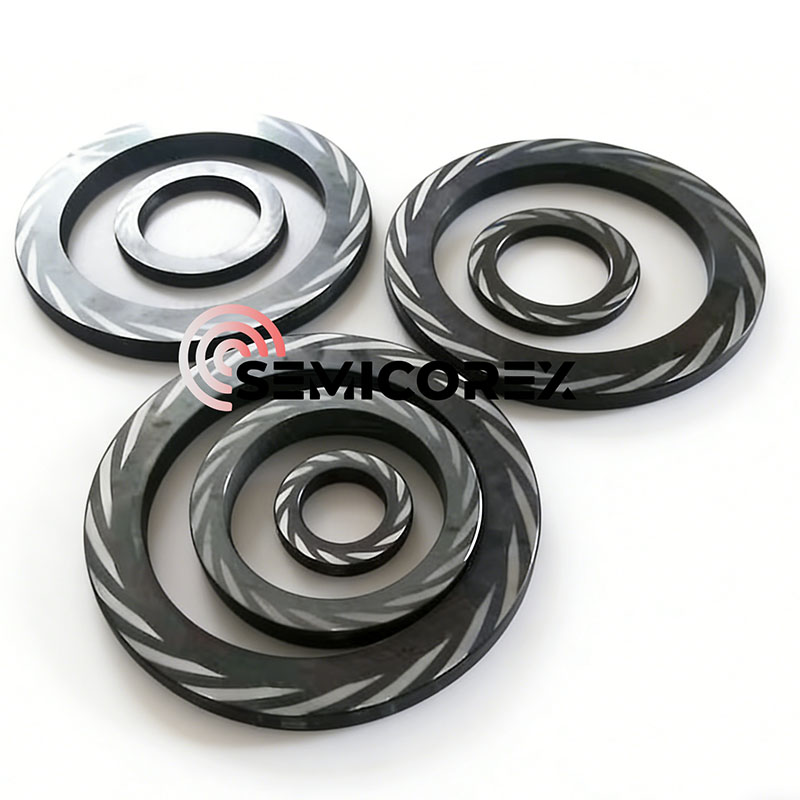
Semicorex supplies high-quality customized mechanical SiC seals. Our products are engineered to deliver superior thermal stability, extended service life, and exceptional process consistency. For customized solutions or additional technical information, please feel free to contact our engineering team.
Phone: +86-13567891907
Email: sales@semicorex.com
Previous:SiC Mechanical Seals