
- English
- Español
- Português
- русский
- Français
- 日本語
- Deutsch
- tiếng Việt
- Italiano
- Nederlands
- ภาษาไทย
- Polski
- 한국어
- Svenska
- magyar
- Malay
- বাংলা ভাষার
- Dansk
- Suomi
- हिन्दी
- Pilipino
- Türkçe
- Gaeilge
- العربية
- Indonesia
- Norsk
- تمل
- český
- ελληνικά
- український
- Javanese
- فارسی
- தமிழ்
- తెలుగు
- नेपाली
- Burmese
- български
- ລາວ
- Latine
- Қазақша
- Euskal
- Azərbaycan
- Slovenský jazyk
- Македонски
- Lietuvos
- Eesti Keel
- Română
- Slovenski
- मराठी
- Srpski језик
Reasons for Deploying Dummy Wafers in FUR Processes
Semiconductor thermal treatment is the indispensable processes in cutting-edge semiconductor chip manufacturing, covering critical procedures such as wafer oxidation, diffusion, thin-film deposition and annealing. These processes impose extremely strict requirements on the uniformity of temperature, gas flow and cleanliness inside the furnace tube. During production, dummy wafers are widely adopted across the industry to remedy deficiencies in the process environment, precisely control process parameters, and guarantee consistent processing and high yield of mass-produced wafers.
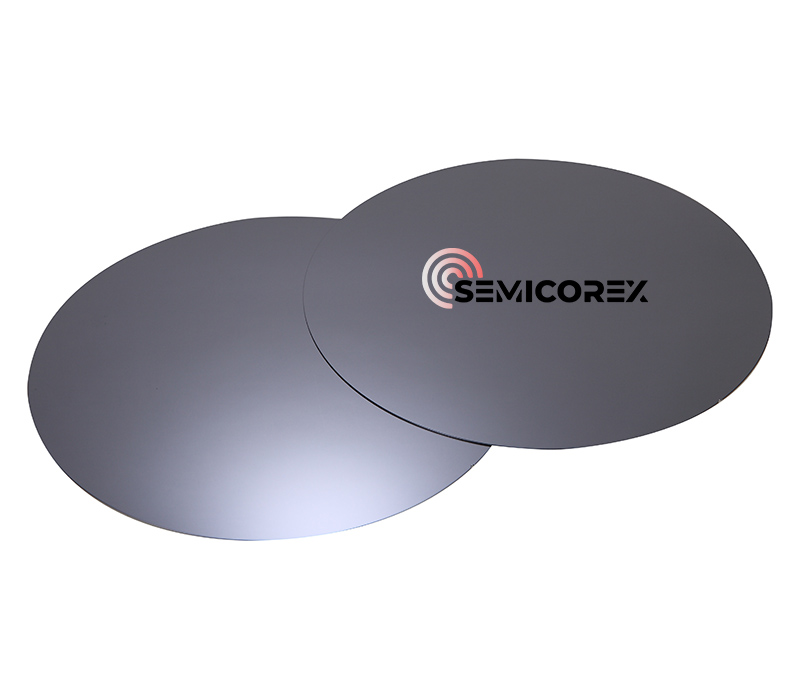
Dummy Wafers serve as core auxiliary consumables that stabilize semiconductor manufacturing processes, extensively used for equipment debugging, process calibration, process monitoring and capacity optimization.
Two Types of Dummy Wafers for Furnace Tube Processes
For FUR thermal treatment furnace tubes, two types of dummy wafers are mainstream in the industry to meet different process compensation requirements:
1. Side Dummy Wafers
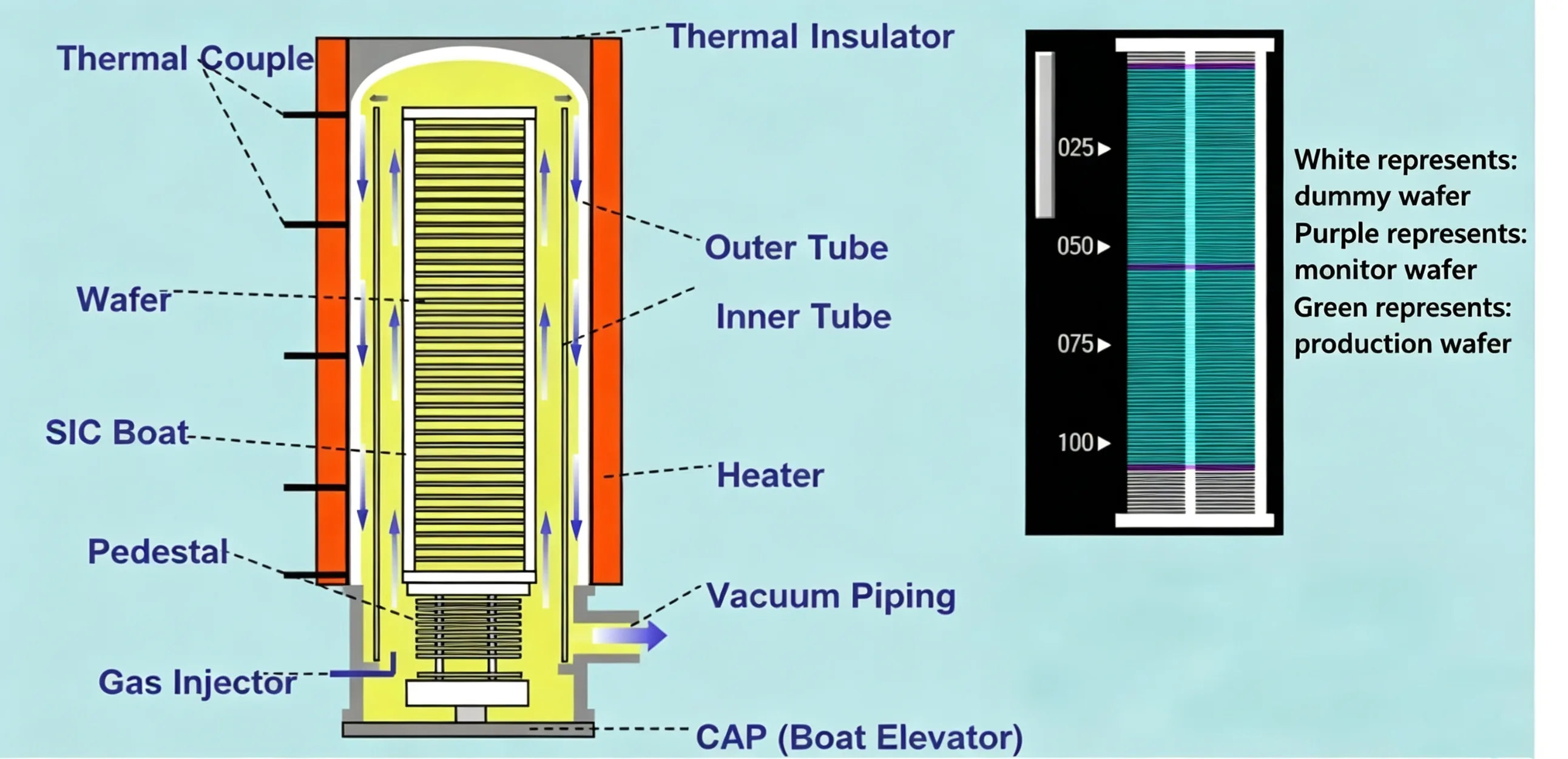
Side dummy wafers are typically placed at the front and rear ends of the wafer boat to form a process buffer zone.
2. Extra Dummy Wafers
Extra dummy wafers are commonly used to fill empty slots on the wafer boat to simulate full-load production conditions.
Core Functions of Dummy Wafers in Furnace Tube Processes
1. Temperature Uniformity Control
A. Heat capacity compensation
Furnace tubes for thermal processing feature a large reaction chambers. If production wafers for thermal processing fail to fulfill all slots, empty positions will result from uneven heat distribution. Placing dummy wafers in these empty slots can balance the overall heat capacity and stabilize process temperatures.
B. Edge effect mitigation
Temperature tends to fluctuate at both ends of the furnace tube. Dummy wafers can be used to buffer thermal disturbances at the edges, ensuring uniform heating for production wafers located at boat edges.
2. Uniformity of Process Gas Flow Field
Vacant slots will disrupt gas circulation and trigger uneven local gas concentration inside the furnace tube. Dummy wafers stabilize consistent gas flow, ensuring identical chemical reaction conditions on the surface of all production wafers for oxidation, diffusion, thin-film deposition and other processes.
3. Process Chamber Contamination Control
Contaminants (such as particles and metal ions) may be present on the inner wall of new or maintained furnace tubes. Dummy wafers can be used as a "sacrificial media" to absorb these contaminants and prevent them from affecting the yield of the product wafer.
4. Process Control & Manufacturing Cost Reduction
Dummy wafers replicate full-load production environments to deliver highly uniform process conditions for all functional wafers. During new process development, all experimental trials can be carried out on dummy wafers without consuming valuable production wafers. The yield losses and unstable process costs caused by omitting dummy wafers far exceed the procurement cost of dummy wafers themselves.
Conclusion
As a low-cost, high-return and essential auxiliary solution for furnace tube thermal processes, dummy wafers deliver four core benefits: heat capacity compensation, standardized gas flow, contaminant adsorption and full-load process simulation. They effectively optimize temperature and gas flow uniformity within furnace tubes, stabilize process parameters, eliminate various manufacturing defects, and greatly improve the stability, consistency and yield of wafer production. Dummy wafers are a vital tool for standardized and refined mass production control in the semiconductor industry.