- English
- Español
- Português
- русский
- Français
- 日本語
- Deutsch
- tiếng Việt
- Italiano
- Nederlands
- ภาษาไทย
- Polski
- 한국어
- Svenska
- magyar
- Malay
- বাংলা ভাষার
- Dansk
- Suomi
- हिन्दी
- Pilipino
- Türkçe
- Gaeilge
- العربية
- Indonesia
- Norsk
- تمل
- český
- ελληνικά
- український
- Javanese
- فارسی
- தமிழ்
- తెలుగు
- नेपाली
- Burmese
- български
- ລາວ
- Latine
- Қазақша
- Euskal
- Azərbaycan
- Slovenský jazyk
- Македонски
- Lietuvos
- Eesti Keel
- Română
- Slovenski
- मराठी
- Srpski језик
How Important are Silicon Carbide Wafer Boats?
In semiconductor manufacturing, besides core process equipment such as photolithography and etching, another type of fundamental component plays a crucial role in process stability: the wafer boat.
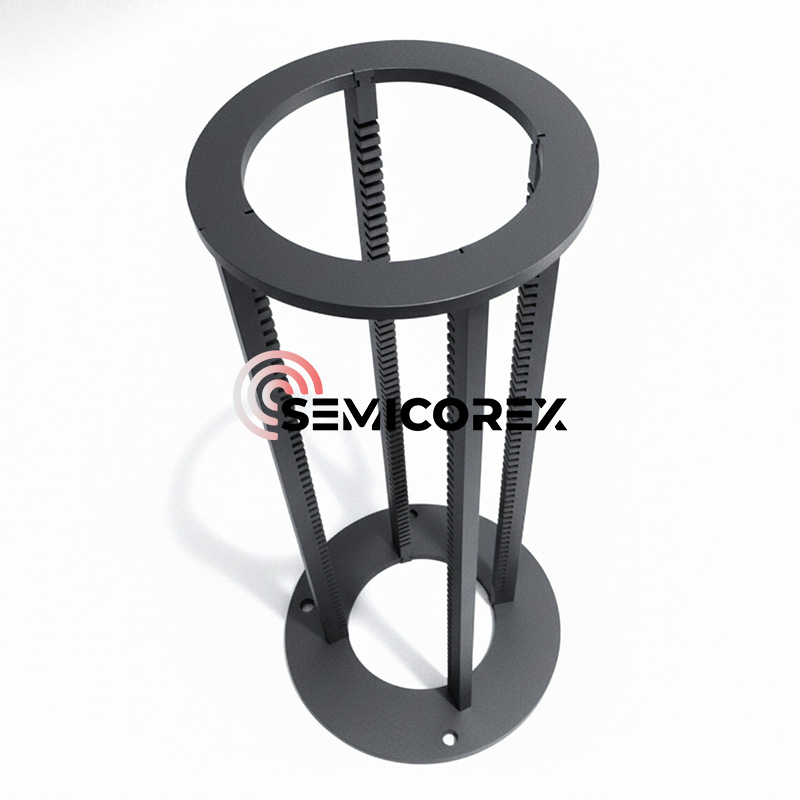
Especially in recent years, with the development of high-temperature processes and third-generation semiconductors, silicon carbide wafer boats, made of silicon carbide, are quietly becoming industry standard.
So, what role does this seemingly insignificant component play in semiconductor manufacturing?
01 Basic Functions of a Wafer Boat
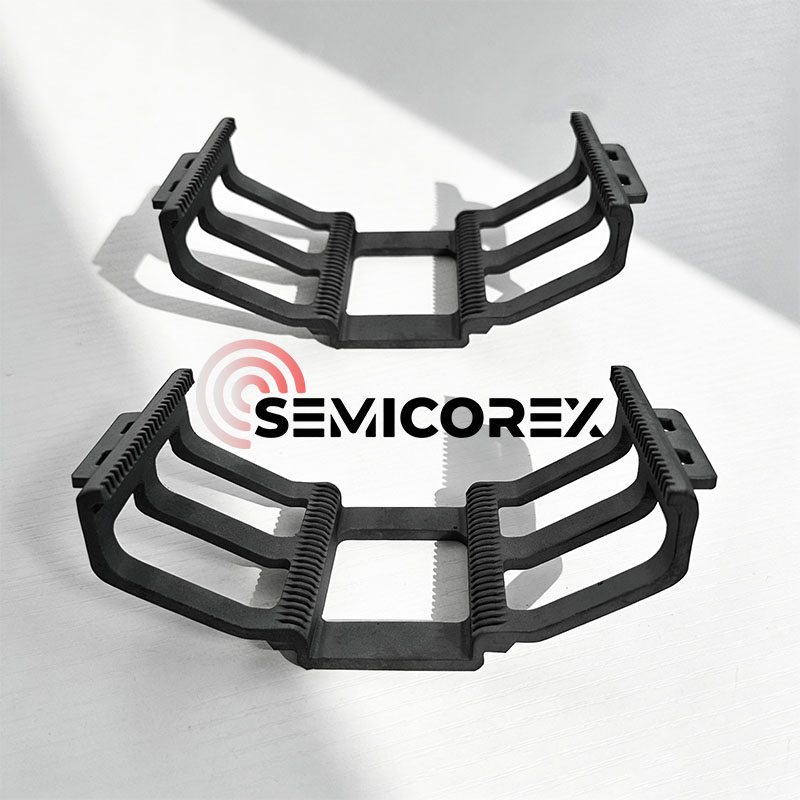
A wafer boat is a process carrier used to hold wafers, primarily used in high-temperature processing equipment.
In the semiconductor manufacturing process, wafers undergo multiple thermal processing steps, such as diffusion, oxidation, annealing, and chemical vapor deposition (CVD). During these processes, wafers are typically batch-processed into furnace tube equipment, and the wafer boat serves the following functions:
- Supporting multiple wafers and maintaining a stable spacing
- Ensuring the positional stability of wafers in high-temperature environments
- Ensuring uniform gas flow in conjunction with the equipment
The structure and material properties of the wafer boat directly affect the thermal field distribution and process consistency.
02 Structural Characteristics of Silicon Carbide Boats
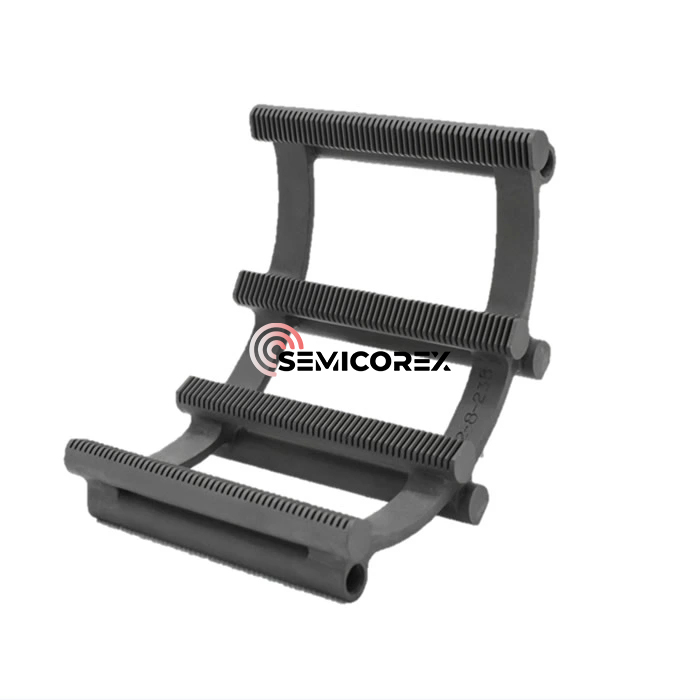
Silicon carbide boats typically employ a frame design, offering high structural stability. Typical features include:
- Multi-layer slot structure for precise wafer positioning
- Open design for easy gas flow between wafers
- High-rigidity frame to reduce deformation risk at high temperatures
Depending on the equipment type, boats can be designed as vertical or horizontal structures and support different wafer sizes (e.g., 6-inch, 8-inch, 12-inch).
03 Material Selection: Why Silicon Carbide?
As semiconductor processes evolve towards higher temperatures and higher cleanliness, traditional materials such as quartz and alumina are increasingly insufficient. In contrast, silicon carbide offers advantages in several performance dimensions.
1. High-Temperature Resistance: Silicon carbide exhibits good structural stability in the temperature range of approximately 1200℃ to 1400℃. Under certain high-purity or special process conditions, it can be used in even higher temperature environments. It does not exhibit melting or significant softening phenomena similar to metallic materials at high temperatures.
2. High Thermal Conductivity: Silicon carbide possesses high thermal conductivity, which helps reduce temperature differences between wafers, thereby improving process consistency.
3. Low Coefficient of Thermal Expansion: Silicon carbide has a low coefficient of thermal expansion, which reduces the impact of thermal stress on wafers during heating and cooling processes.
4. Chemical Stability: Silicon carbide exhibits good chemical stability in various atmospheres, including oxidizing and reducing atmospheres. However, it will still undergo a slow oxidation reaction in high-temperature oxygen environments, forming a silicon dioxide protective layer.
5. Material Purity and Contamination Control: Semiconductor-grade silicon carbide typically has strictly controlled impurity content to reduce the risk of contamination on the wafer surface. There are significant differences between materials used in different process grades.
04 Application Areas
Silicon carbide boats are currently widely used in multiple fields, including:
- Thermal processing in integrated circuit manufacturing
- Power semiconductor device manufacturing (e.g., SiC devices)
- High-temperature processing of photovoltaic silicon wafers
- Semiconductor material and process research and development
Its advantages are even more pronounced in scenarios requiring high temperature, strong corrosion, or high cleanliness.
Semicorex offers SiC wafer boats, furnace tubes, cantilever paddles, etc in high-temperature furnaces. If you have any inquiries or need additional details, please don't hesitate to get in touch with us.
Contact phone # +86-13567891907
Email: sales@semicorex.com