
- English
- Español
- Português
- русский
- Français
- 日本語
- Deutsch
- tiếng Việt
- Italiano
- Nederlands
- ภาษาไทย
- Polski
- 한국어
- Svenska
- magyar
- Malay
- বাংলা ভাষার
- Dansk
- Suomi
- हिन्दी
- Pilipino
- Türkçe
- Gaeilge
- العربية
- Indonesia
- Norsk
- تمل
- český
- ελληνικά
- український
- Javanese
- فارسی
- தமிழ்
- తెలుగు
- नेपाली
- Burmese
- български
- ລາວ
- Latine
- Қазақша
- Euskal
- Azərbaycan
- Slovenský jazyk
- Македонски
- Lietuvos
- Eesti Keel
- Română
- Slovenski
- मराठी
- Srpski језик
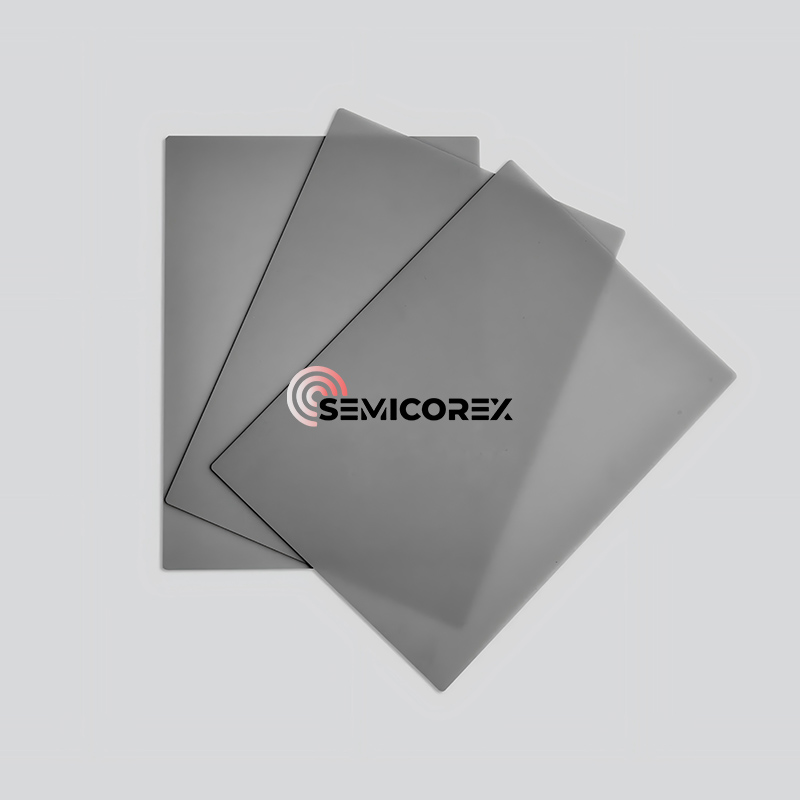
Ceramic Substrates: Al₂O₃, AlN, Si₃N₄
1. The Core Mission of Ceramic Substrates
In the grand scheme of modern electronics industry, ceramic substrates, though often hidden behind the scenes, play an irreplaceable and crucial role. From high-frequency signal transmission in 5G base stations to motor controllers in new energy vehicles, and the core packaging layer of power semiconductors, ceramic substrates steadfastly remain at the core of electronic devices, silently undertaking the dual mission of "heat dissipation backbone" and "insulation guardian."
Taking 5G base stations as an example, they generate a large amount of heat during operation. If this heat cannot be dissipated in time, the equipment performance will significantly degrade, or even cause malfunctions. Ceramic substrates, with their excellent thermal conductivity, can quickly conduct heat away, ensuring the stable operation of the base station. In the motor controllers of new energy vehicles, ceramic substrates not only must withstand high-temperature environments but also the tests of high voltage and high current. Their superior insulation properties and mechanical strength provide a reliable guarantee for the efficient operation of the motor.
According to authoritative forecasts, the global ceramic substrate market is projected to surge from $1.13 billion in 2022 to $4.15 billion in 2029, representing a compound annual growth rate (CAGR) of 18.23%. This rapid growth is driven by explosive demand from power electronics, third-generation semiconductors, and high-end equipment. With the rapid development of technology, these fields are placing increasingly higher demands on the performance of electronic devices, making ceramic substrates, as a key material, increasingly important.
2. Technical Profiles of the Three Mainstream Substrates
Among the large family of ceramic substrates, alumina (Al₂O₃), aluminum nitride (AlN), and silicon nitride (Si₃N₄) are the three most prominent, each shining brightly in different application fields due to their unique material properties.
Alumina (Al₂O₃) ceramic substrates boast 60 years of industrialization experience, mature technology, and relatively low cost. Their high production volume and outstanding cost-effectiveness have allowed them to occupy a significant share of the low-to-mid-range market. In the field of general consumer electronics, such as smartphones and tablets, alumina ceramic substrates meet the demands of large-scale production with their stable performance and affordable price. However, as electronic products develop towards miniaturization, high frequency, and high power, the relatively low thermal conductivity of alumina ceramic substrates is becoming increasingly apparent, making it difficult to meet the stringent heat dissipation requirements of high-end applications.
Aluminum nitride (AlN) ceramic substrates stand out due to their superior thermal conductivity, ranging from 200 to 270 W/(m·K), which is 4 to 7 times that of alumina. This characteristic makes aluminum nitride the preferred choice for high-power applications, such as power amplifiers in 5G base stations and high-power LED lighting. In 5G base stations, aluminum nitride ceramic substrates can quickly dissipate the heat generated by the power amplifier, ensuring stable operation of the equipment under high-frequency and high-power conditions, effectively improving communication quality and efficiency. Furthermore, aluminum nitride also possesses high mechanical strength and good corrosion resistance, making it considered the most promising high thermal conductivity ceramic material. However, the fabrication of aluminum nitride materials is currently challenging, with high production costs and difficulties in large-scale mass production, which significantly limits its widespread application in electronic packaging.
Silicon nitride (Si₃N₄) ceramic substrates, with their excellent overall performance, are emerging in cutting-edge fields with high reliability requirements. With a bending strength exceeding 800 MPa, silicon nitride is one of the strongest known ceramic materials, giving the substrate exceptional resistance to mechanical shock, vibration, and thermal shock, making it less prone to breakage in complex installation and operating environments. Simultaneously, silicon nitride has a low coefficient of thermal expansion of only 3.2 × 10⁻⁶/℃, exhibiting excellent compatibility with semiconductor chip materials (such as silicon: ~3 × 10⁻⁶/℃, silicon carbide: ~4 × 10⁻⁶/℃), significantly reducing thermal cycling stress and improving module reliability. In the aerospace field, equipment needs to operate in extreme environments; the high reliability and stability of silicon nitride ceramic substrates provide strong support for the normal operation of avionics equipment. However, the high manufacturing cost and complex processes of silicon nitride ceramic substrates limit their application in some cost-sensitive fields.
Semicorex offers high-quality ceramic substrates. If you have any inquiries or need additional details, please don't hesitate to get in touch with us.
Contact phone # +86-13567891907
Email: sales@semicorex.com
Previous:What are The Glass Wafers?