
- English
- Español
- Português
- русский
- Français
- 日本語
- Deutsch
- tiếng Việt
- Italiano
- Nederlands
- ภาษาไทย
- Polski
- 한국어
- Svenska
- magyar
- Malay
- বাংলা ভাষার
- Dansk
- Suomi
- हिन्दी
- Pilipino
- Türkçe
- Gaeilge
- العربية
- Indonesia
- Norsk
- تمل
- český
- ελληνικά
- український
- Javanese
- فارسی
- தமிழ்
- తెలుగు
- नेपाली
- Burmese
- български
- ລາວ
- Latine
- Қазақша
- Euskal
- Azərbaycan
- Slovenský jazyk
- Македонски
- Lietuvos
- Eesti Keel
- Română
- Slovenski
- मराठी
- Srpski језик

Why Is Silicon Carbide Coated a Smarter Choice for Demanding Process Environments?
Article Summary
When engineers and procurement teams look for components that can survive harsh process conditions, the real problem is rarely a single failure mode. It is usually a combination of heat, corrosion, particle control, service life, maintenance cost, and process stability. That is exactly why Silicon Carbide Coated products continue to draw serious attention in semiconductor, epitaxy, CVD, and other high-demand manufacturing environments.
This article explains what makes Silicon Carbide Coated materials valuable, where buyers often make the wrong assumptions, how coating performance affects yield and uptime, and what should be checked before choosing a supplier. It also shows how Semicorex Advanced Material Technology Co.,Ltd. fits into conversations around reliable advanced material solutions for demanding applications.
Table of Contents
- What Will This Article Cover?
- What Does Silicon Carbide Coated Actually Mean?
- Why Do Buyers Keep Running Into Material Problems?
- What Makes Silicon Carbide Coated Valuable in Real Production?
- Which Performance Differences Matter Most When Comparing Options?
- Where Is Silicon Carbide Coated Commonly Used?
- How Should Buyers Evaluate a Silicon Carbide Coated Product?
- What Purchasing Mistakes Should Be Avoided?
- What Questions Do Buyers Ask Most Often?
- Why Should You Contact Us Now?
Article Outline
- Definition and practical meaning of Silicon Carbide Coated materials
- Common customer pain points in harsh process environments
- Performance advantages related to purity, durability, and stability
- Comparison factors buyers should use before placing an order
- Application scenarios across advanced manufacturing
- Supplier evaluation logic and procurement guidance
- Frequently asked questions and a clear next step
What Does Silicon Carbide Coated Actually Mean?
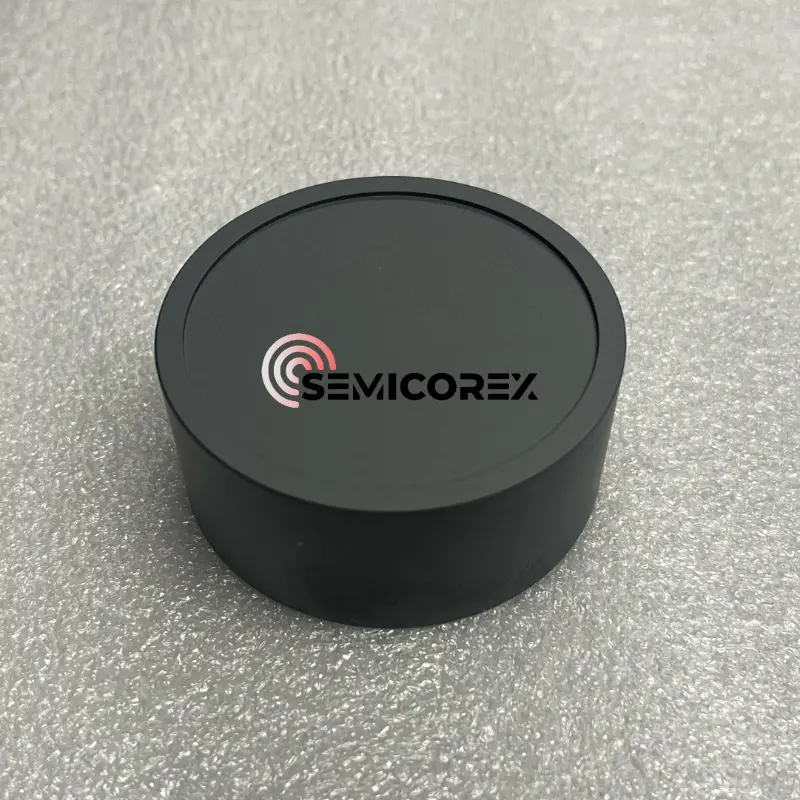
Silicon Carbide Coated usually refers to a base component that has been treated with a silicon carbide layer in order to improve surface performance under difficult operating conditions. In practical terms, buyers are not just paying for a coating. They are paying for a surface that can better resist wear, corrosive attack, thermal stress, and contamination while maintaining dimensional consistency during use.
That distinction matters. Many product pages make coated materials sound interchangeable, but experienced buyers know the coating quality, uniformity, adhesion, density, and process consistency can completely change the result. Two parts may look similar on paper while behaving very differently once they enter a real chamber.
In industries where surface integrity directly influences output quality, the question is no longer “Does the part have a coating?” but rather “Can the coating stay stable under my exact conditions?” That is where better technical judgment starts.
Buyer takeaway: A Silicon Carbide Coated part is only as good as its coating process, surface quality, and long-term performance in your actual working environment.
Why Do Buyers Keep Running Into Material Problems?
Most customers do not start looking for a new material solution because they are curious. They start looking because something is already going wrong. The pain points are usually expensive, repetitive, and disruptive:
- Unexpected particle generation that affects product quality
- Premature surface wear that shortens component life
- Chemical attack in aggressive process environments
- Thermal cycling that causes cracking, instability, or distortion
- Frequent maintenance that increases downtime and labor costs
- Inconsistent quality between batches from the same supplier
What makes these issues frustrating is that they rarely stay isolated. A surface problem becomes a contamination problem. A contamination problem becomes a yield problem. A yield problem becomes a cost and delivery problem. That chain reaction is exactly why material selection deserves more attention than many teams give it at the beginning of a project.
For buyers responsible for process continuity, the appeal of Silicon Carbide Coated solutions is not theoretical. It is tied to one very practical goal: reducing the number of things that can go wrong under pressure.
What Makes Silicon Carbide Coated Valuable in Real Production?
The real value of Silicon Carbide Coated components shows up when production conditions get unforgiving. Instead of focusing on marketing claims, it helps to look at what customers are actually trying to improve.
| Customer Concern | Why It Matters | How Silicon Carbide Coated Can Help |
|---|---|---|
| Surface durability | Weak surfaces wear out fast and create instability | A harder, more resistant surface can extend service life |
| Chemical resistance | Corrosive media can damage standard materials quickly | The coating can improve resistance in aggressive environments |
| Particle control | Particles can hurt process consistency and finished product quality | A stable surface can help reduce contamination risks |
| Thermal reliability | Heat and repeated temperature change stress the component | Better surface behavior helps the part remain reliable under demanding conditions |
| Maintenance burden | Frequent replacement increases cost and downtime | Longer-lasting parts can improve overall operating efficiency |
Another reason buyers turn to this category is predictability. In high-value production, people do not just want a material that performs once. They want one that performs the same way again and again. That kind of reliability helps planning, reduces troubleshooting, and improves confidence in the line.
Semicorex Advanced Material Technology Co.,Ltd. appears in this conversation because customers increasingly want supply partners that understand both the product itself and the process pressure behind it. A good supplier should not just hand over a catalog. They should understand why coating performance matters to your actual operating target.
Which Performance Differences Matter Most When Comparing Options?
Not every Silicon Carbide Coated product should be judged by the same checklist, but there are several points that deserve attention almost every time:
- Coating uniformity: Uneven coverage can create weak spots and shorten usable life.
- Adhesion strength: If the coating does not bond well to the substrate, performance risks increase quickly.
- Surface finish: Surface condition can influence both cleanliness and process behavior.
- Purity level: In sensitive applications, material cleanliness affects process confidence.
- Thermal compatibility: The coating and substrate should behave predictably under temperature changes.
- Repeatability: One good sample means little without consistent production quality.
Buyers also need to compare total use value, not just unit price. A cheaper part that fails early may look attractive in procurement paperwork, but it often costs more after shutdowns, replacement cycles, and quality losses are counted.
| Evaluation Point | What Buyers Often Focus On | What They Should Also Ask |
|---|---|---|
| Price | Initial quotation | What is the actual cost per service cycle? |
| Specification | Size and basic material | How stable is the coating in real operating conditions? |
| Lead time | Delivery speed | Can the supplier maintain consistency over repeated orders? |
| Sample performance | Short-term test result | What evidence supports long-term repeatability? |
| Supplier response | Fast communication | Do they understand application-specific technical concerns? |
Where Is Silicon Carbide Coated Commonly Used?
The reason this material category keeps attracting attention is simple: there are many environments where surface performance becomes a critical factor. Silicon Carbide Coated components are especially attractive where users need a combination of cleanliness, strength, and resistance under stress.
- Semiconductor process equipment
- Epitaxy-related components
- CVD and similar deposition environments
- High-temperature process fixtures
- Applications that require stable surface behavior and low contamination risk
That does not mean every project automatically needs this solution. The better question is whether the process environment is harsh enough that a standard material starts becoming the weak link. If the answer is yes, moving toward a more capable surface solution often makes sense.
In procurement discussions, this is the moment where teams should stop asking only “What can we buy?” and start asking “What will keep our process more stable over time?” Those are very different questions, and the second one usually leads to better results.
How Should Buyers Evaluate a Silicon Carbide Coated Product?
Choosing a Silicon Carbide Coated solution should be a controlled decision, not a rushed comparison between two quotations. A practical evaluation path often looks like this:
- Define the actual operating conditions, including temperature, atmosphere, exposure, cleaning routine, and failure history.
- Identify the main risk you need the part to solve, such as wear, contamination, corrosion, or lifespan.
- Check whether the supplier can discuss coating process details with technical clarity instead of only offering sales language.
- Review consistency expectations for repeated batches, not just for the first sample.
- Ask how the supplier handles application-specific customization when standard configurations are not enough.
- Balance performance, lead time, and total lifecycle value rather than focusing on a single visible number.
This is where supplier quality starts to matter as much as product quality. A capable supplier can help customers avoid specification mistakes before money is wasted on the wrong configuration. That support is not just convenient; it can protect the whole project timeline.
Practical rule: If a supplier cannot explain why their Silicon Carbide Coated product should work in your process, you should be careful about trusting the result.
What Purchasing Mistakes Should Be Avoided?
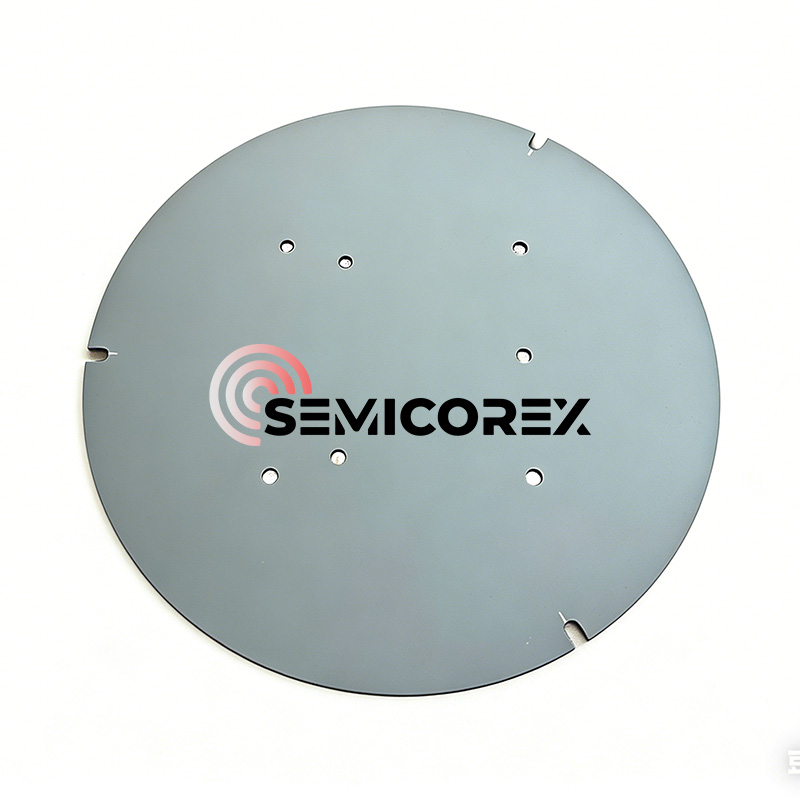
Some buying mistakes show up again and again, especially when teams are under deadline pressure. The most common ones are easy to recognize:
- Choosing based only on price without checking service life
- Assuming all coatings with the same name perform the same way
- Ignoring process details that influence material selection
- Testing only one short cycle and calling the evaluation complete
- Overlooking batch-to-batch consistency
- Working with suppliers who cannot provide useful technical communication
These mistakes do not always fail immediately, which is why they are dangerous. Sometimes the part works just well enough at first to pass a basic check, then starts causing trouble later when the line is already committed. By then, changing direction becomes more expensive.
A better strategy is to treat material choice as part of process reliability planning. That mindset helps teams make decisions that hold up under real production pressure.
What Questions Do Buyers Ask Most Often?
Is Silicon Carbide Coated always better than an uncoated alternative?
Not automatically. It becomes more attractive when the application demands stronger resistance to wear, contamination, chemical attack, or thermal stress. The right choice depends on the process environment and performance target.
What should I ask a supplier before ordering?
Ask about coating consistency, surface quality, application fit, production stability, customization capability, and how the product has been matched to conditions similar to yours.
Why do two suppliers quote very different prices for a similar-looking part?
Because the visible specification may not reveal differences in coating process, quality control, purity, or production repeatability. The lower price is not always the lower overall cost in use.
Can Silicon Carbide Coated parts help reduce downtime?
They can when they improve durability and process stability enough to reduce unplanned replacement, contamination-related trouble, or performance drift over time.
Does customization matter for this kind of product?
Yes. In many demanding environments, a standard option may not fully match the geometry, thermal condition, or service expectation of the application. Tailored solutions can be more effective than forcing a near-fit.
Why Should You Contact Us Now?
If you are still comparing surface solutions for a demanding application, now is the right time to look beyond basic specifications and ask which option will actually support cleaner performance, longer service life, and more stable output. A strong Silicon Carbide Coated solution is not just a material choice. It is a way to reduce uncertainty where failure costs the most.
Semicorex Advanced Material Technology Co.,Ltd. is positioned to support buyers who need advanced material solutions with a clearer focus on performance, consistency, and application fit. If you are evaluating a new project, replacing an underperforming component, or trying to improve process reliability, contact us to discuss your requirements and find a more dependable path forward.
Previous:No News