
- English
- Español
- Português
- русский
- Français
- 日本語
- Deutsch
- tiếng Việt
- Italiano
- Nederlands
- ภาษาไทย
- Polski
- 한국어
- Svenska
- magyar
- Malay
- বাংলা ভাষার
- Dansk
- Suomi
- हिन्दी
- Pilipino
- Türkçe
- Gaeilge
- العربية
- Indonesia
- Norsk
- تمل
- český
- ελληνικά
- український
- Javanese
- فارسی
- தமிழ்
- తెలుగు
- नेपाली
- Burmese
- български
- ລາວ
- Latine
- Қазақша
- Euskal
- Azərbaycan
- Slovenský jazyk
- Македонски
- Lietuvos
- Eesti Keel
- Română
- Slovenski
- मराठी
- Srpski језик
What Is The Temperature Gradient In The Thermal Field?
The single crystal growth thermal field is the spatial distribution of temperature within the high-temperature furnace during the single crystal growth process, which directly affects the quality, growth rate, and crystal formation rate of the single crystal. Thermal field can be divided into steady-state and transient types. The steady-state thermal field is the thermal environment with a relatively temperature distribution, while the transient thermal field exhibits the constantly changing furnace temperature.
During single crystal growth, phase transformation (liquid phase to solid phase) occurs continuously, releasing solidification latent heat. At the same time, as the crystal is pulled longer and longer, the melt surface drops continuously, and the heat conduction, radiation and other conditions are changing. Therefore, the thermal field is variable, which is referred to as the dynamic thermal field.
The Solid-Liquid Interface
At a certain moment, every point in the furnace has a specific temperature. If we connect all points in the temperature field with the same temperature, a spatial surface is obtained. On this spatial surface, the temperature is the same everywhere, which we call an isothermal surface. Among the family of isothermal surfaces in the single crystal furnace, there is a very special isothermal surface that serves as the boundary between the solid phase and the liquid phase, hence it is also known as the solid-liquid interface. Crystals grow from this solid-liquid interface.
The Temperature Gradient
Temperature gradient refers to the rate of temperature change from the temperature of a point A in the thermal field to the temperature of an adjacent point B around it, i.e., the rate of temperature change per unit distance.
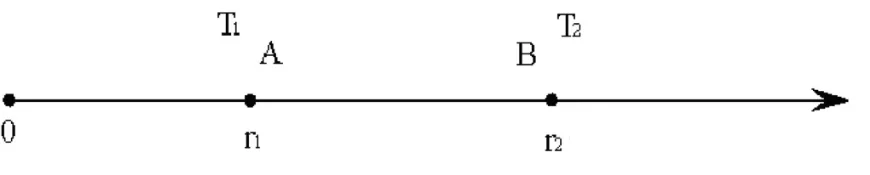
During monocrystalline silicon growth, there are two forms (solid and melt) in the thermal field, and thus two types of temperature gradients:
1. Longitudinal temperature gradient and radial temperature gradient in the crystal.
2. Longitudinal temperature gradient and radial temperature gradient in the melt.
These are two completely different temperature distributions, but the temperature gradient at the solid-liquid interface has the greatest impact on the crystallization state. The radial temperature gradient of the crystal is determined by the longitudinal and transverse heat conduction of the crystal, surface radiation, and its position in the thermal field. Generally speaking, the temperature is higher at the center and lower at the edge of the crystal. The radial temperature gradient of the melt is mainly determined by the heaters around the crucible, so the temperature is lower at the center and higher near the crucible, and the radial temperature gradient is always a positive value.
Requirements for Proper Thermal Field Temperature Distribution
1. The longitudinal temperature gradient in the crystal should be sufficiently large but not excessively so, to ensure that the crystal has sufficient heat dissipation capacity during growth to remove the crystallization latent heat.
2. The longitudinal temperature gradient in the melt should be relatively large to prevent the formation of new crystal nuclei in the melt; however, an excessively large gradient is likely to cause dislocations and result in crystal breakage.
3. The longitudinal temperature gradient at the crystallization interface should be appropriately large to form the necessary supercooling degree, providing sufficient driving force for single crystal growth. It should not be too large, otherwise structural defects will occur. Meanwhile, the radial temperature gradient should be as small as possible to make the crystallization interface tend to be flat.
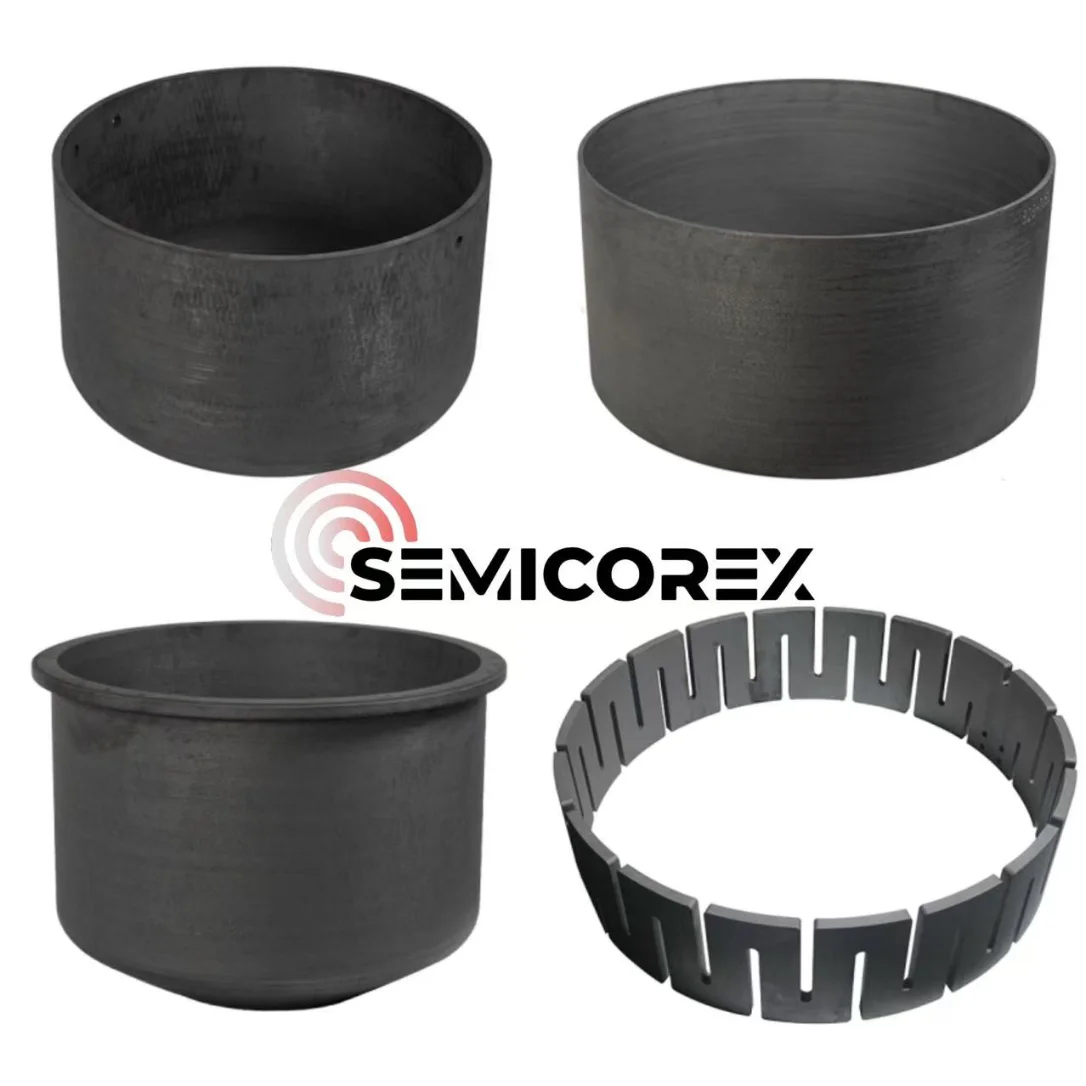
The configuration and component selection of the thermal field system largely determine the variation of the temperature gradient inside the high-temperature furnace. Semicorex supplies high-grade C/C composite heaters, C/C composite guide tubes, C/C composite crucibles and C/C composite thermal insulation cylinders to our valued customers, helping build the well-performed and stably operated single-crystal thermal field system to achieve optimal crystal growth quality and production efficiency.
Previous:A Brief Introduction To Dummy Wafers