
- English
- Español
- Português
- русский
- Français
- 日本語
- Deutsch
- tiếng Việt
- Italiano
- Nederlands
- ภาษาไทย
- Polski
- 한국어
- Svenska
- magyar
- Malay
- বাংলা ভাষার
- Dansk
- Suomi
- हिन्दी
- Pilipino
- Türkçe
- Gaeilge
- العربية
- Indonesia
- Norsk
- تمل
- český
- ελληνικά
- український
- Javanese
- فارسی
- தமிழ்
- తెలుగు
- नेपाली
- Burmese
- български
- ລາວ
- Latine
- Қазақша
- Euskal
- Azərbaycan
- Slovenský jazyk
- Македонски
- Lietuvos
- Eesti Keel
- Română
- Slovenski
- मराठी
- Srpski језик
A Brief Introduction To Dummy Wafers
Advanced semiconductor manufacturing consists of multiple of process steps, including thin film deposition, photolithography, etching, ion implantation, chemical mechanical polishing. During this process, even tiny flaws in the process may have a detrimental effect on the performance and reliability of the final semiconductor chips. Therefore, It is a significant challenge to maintain process stability and consistency, as well as conducting efficient equipment monitoring. Dummy wafers are crucial tools that help tackle these challenges.
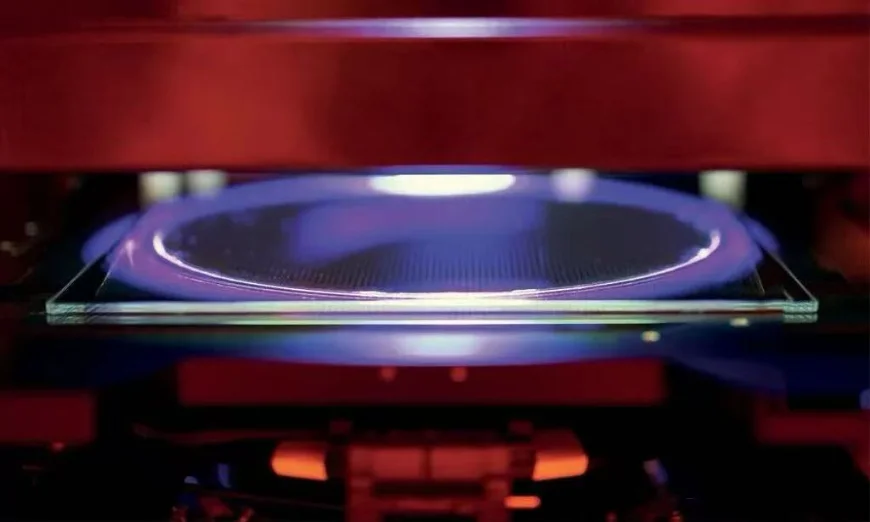
Dummy wafers are wafers that do not carry actual circuitry and are not used in the final chip production process. These wafers can be brand new, lower-grade test wafers or reclaimed wafers. Different from expensive product wafers used to manufacture integrated circuits, they are typically used for various non-production-related that are essential for semiconductor production.
Applications of Dummy Wafers
1.Process Qualification & Tuning
Dummy wafers are commonly used for testing prior to these situations to ensure process stability and equipment performance compliance, such as before the commissioning of new process equipment, after maintenance or component replacement of existing equipment, and during the development of new process recipes. The equipment performance verification and precise adjustment of process parameters can be successfully completed through analyzing the processing results on the dummy wafers, which effectively reduces the loss of product wafers and cuts down the production costs for enterprises.
2.Equipment Conditioning & Warm-up
The chamber environment of many semiconductor process equipment (e.g., chemical vapor deposition (CVD) equipment, physical vapor deposition (PVD) equipment, and etching machines) has a significant impact on processing results. For example, the coating status and temperature distribution on the inner walls of the chamber need to reach a stable state. Dummy wafers are often used to condition the process chambers and stabilize the internal environment (e.g., temperature, chemical atmosphere, and surface status) of the chambers, which effectively prevents process deviations or defects in the first batch of product wafers caused by the equipment not operating at its optimal state.
3.Particle Monitoring & Contamination Control
Semiconductor manufacturing has extremely high cleanliness requirements; even tiny particle contamination can lead to chip failure. Through examining the particles adhering to the surface of the dummy wafers fed into the equipment, the cleanliness of the equipment can be evaluated. Thus, product wafers can be successfully protected from contamination by promptly identifying possible sources of contamination and putting cleaning or maintenance procedures in place.
4.Slot Filling for Batch Uniformity
To achieve the gas flow, temperature distribution, and reactant concentration in the process chamber, full-load operation is the common practice in the batch processing equipment like diffusion furnaces, oxidation furnaces, or wet cleaning tanks. Dummy wafers are used to fill the empty slots in the wafer boat that do not have a sufficient number of product wafers, which can reduce edge effect and ensure consistent processing conditions for all product wafers, particularly for those located at the edges of the wafer boat.
5.Stabilization of Chemical Mechanical Polishing (CMP) Processes
Dummy wafers also can be used in the pre-treatment stage of the CMP process to maintain process stability. Pre-run testing with dummy wafers optimizes the roughness and porosity of the polishing pad, minimizes process uncertainties during the start-up stabilization phase or the transition phase before shutdown, and reduces wafer scratches and defects caused by abnormal slurry supply and head diaphragm wear.
Semicorex offers cost-effective SiC dummy wafers. If you have any inquiries or need additional details, please don't hesitate to get in touch with us.
Contact phone # +86-13567891907
Email: sales@semicorex.com