
- English
- Español
- Português
- русский
- Français
- 日本語
- Deutsch
- tiếng Việt
- Italiano
- Nederlands
- ภาษาไทย
- Polski
- 한국어
- Svenska
- magyar
- Malay
- বাংলা ভাষার
- Dansk
- Suomi
- हिन्दी
- Pilipino
- Türkçe
- Gaeilge
- العربية
- Indonesia
- Norsk
- تمل
- český
- ελληνικά
- український
- Javanese
- فارسی
- தமிழ்
- తెలుగు
- नेपाली
- Burmese
- български
- ລາວ
- Latine
- Қазақша
- Euskal
- Azərbaycan
- Slovenský jazyk
- Македонски
- Lietuvos
- Eesti Keel
- Română
- Slovenski
- मराठी
- Srpski језик
How is the stress generated in semiconductor quartz products?
Quartz is the primary material in high-end fields such as semiconductors and optical instruments. However, the existence of stress is like a "time bomb", which can damage the physical and chemical properties of quartz, affecting the usage effect and lifespan of its final products. Therefore, thoroughly analyzing the causes of stress is of vital importance for the production of high-quality quartz products.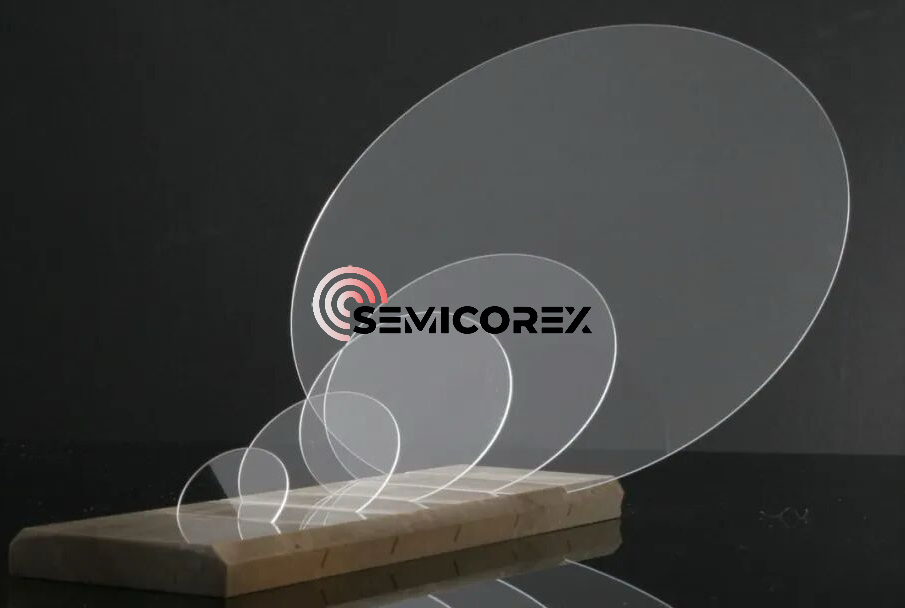
Main Factors of Quartz Stress Generation
1.Crystal structure differences
Quartz exhibits multiple crystal forms, with α-quartz, β-quartz, and γ-quartz being the most prevalent. As external conditions like temperature change, the crystal form of quartz will undergo reversible transformation accompanied by its lattice structure restructuring. This structural reconstruction modifies atomic spacing and configuration, thereby generating internal stress within the quartz.
2.Crystal impurities and defects
The presence of impurity atoms like Al and B in quartz will result in lattice distortion since their ionic radii differ from those of the host Si and O ions. They can disrupt the original lattice balance and generate local stress. Additionally, crystal defects inside quartz can also result in local lattice distortion and subsequently generate internal stress.
3.Thermal stress caused by temperature changes
Variations in temperature change rates across different parts of the quartz products lead to corresponding differences in the degree of thermal expansion and contraction. Thermal stress is generated in this mutual restraint caused by such differences. For instance, when rapidly cooled after high-temperature processing, the product surface cools and contracts quickly upon contact with cold air or cooling fluid, while the interior retains heat longer, remaining at a higher temperature with minimal contraction. The surface contraction is hindered by the interior, generating tensile stress on the surface and compressive stress exerted by the surface on the interior.
4.Mechanical stress generated by mechanical processing
During the processing of quartz products, mechanical processing procedures such as cutting, grinding, polishing, and laser cutting and drilling are required. The interaction between the cutting tool and the quartz surface will cause plastic and elastic deformation on the material surface in this process, thereby leaving residual stress on the material surface and inside. In addition, factors such as vibration during the processing and uneven cutting force can also intensify the generation of stress.
Semicorex provides high-quality quartz components. If you have any inquiries or need additional details, please don't hesitate to get in touch with us.
Contact phone # +86-13567891907
Email: sales@semicorex.com