
- English
- Español
- Português
- русский
- Français
- 日本語
- Deutsch
- tiếng Việt
- Italiano
- Nederlands
- ภาษาไทย
- Polski
- 한국어
- Svenska
- magyar
- Malay
- বাংলা ভাষার
- Dansk
- Suomi
- हिन्दी
- Pilipino
- Türkçe
- Gaeilge
- العربية
- Indonesia
- Norsk
- تمل
- český
- ελληνικά
- український
- Javanese
- فارسی
- தமிழ்
- తెలుగు
- नेपाली
- Burmese
- български
- ລາວ
- Latine
- Қазақша
- Euskal
- Azərbaycan
- Slovenský jazyk
- Македонски
- Lietuvos
- Eesti Keel
- Română
- Slovenski
- मराठी
- Srpski језик

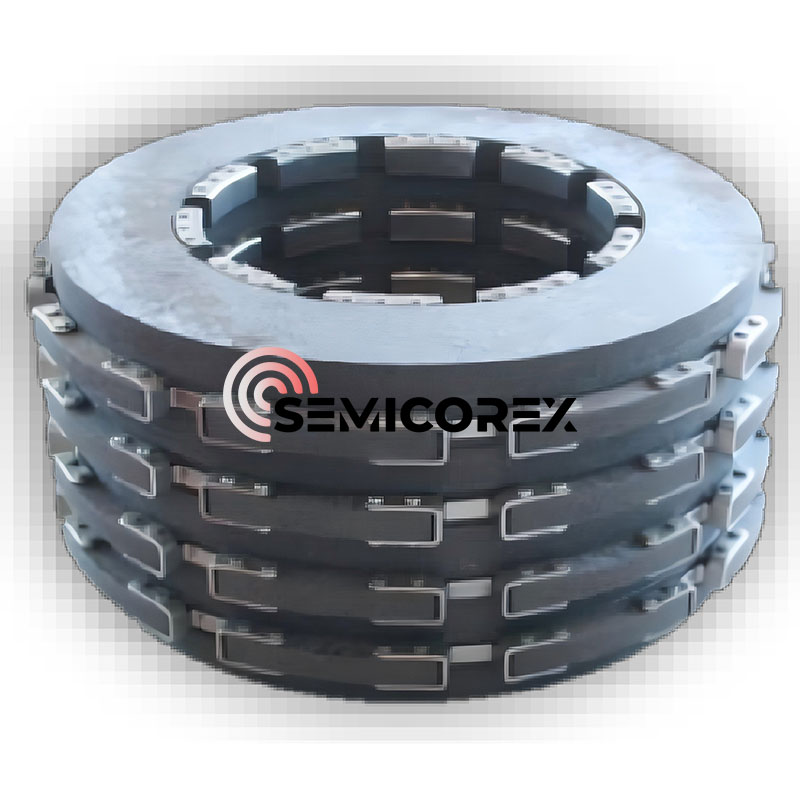

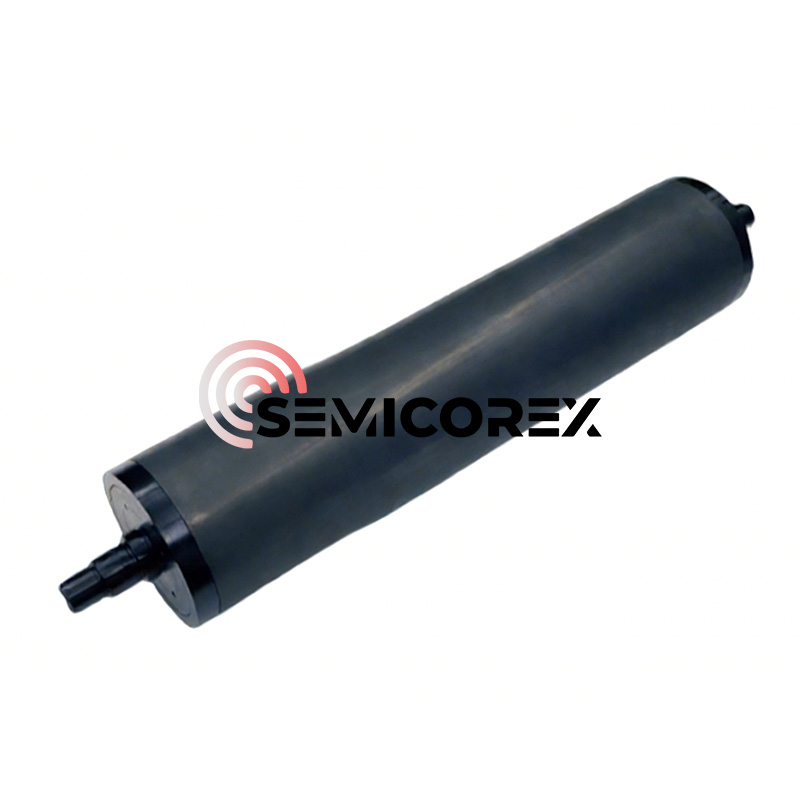

Motorbike Carbon Ceramic Brake
Semicorex Motorbike Carbon Ceramic Brake Disks are manufactured from carbon fiber-reinforced carbon/silicon carbide (C/SiC) composites, offering a lightweight alternative for advanced motorcycle braking systems. Combining a three-dimensional carbon fiber reinforcement structure with a dual-phase C/SiC matrix, these customizable brake disks deliver high thermal stability, mechanical toughness, and wear resistance for demanding motorcycle applications.*
Send Inquiry
Product Description
Semicorex Motorbike Carbon Ceramic Brake is a customized motorcycle brake disk manufactured from an advanced carbon/silicon carbide composite. Unlike conventional metal brake rotors, its material structure integrates carbon fiber reinforcement with carbon and silicon carbide matrix phases, providing a combination of low density, thermal durability, and mechanical strength.
Developed for motorcycle braking applications, this composite structure offers an alternative material solution for manufacturers seeking lightweight components with excellent resistance to wear, thermal shock, and elevated temperatures.
Understanding the Carbon/Ceramic Composite Structure

The brake disk uses a three-dimensional carbon fiber felt or woven preform as its reinforcing framework. The surrounding matrix consists of two material phases: carbon (C) and silicon carbide (SiC).
This dual-matrix configuration combines the complementary characteristics of both materials. Carbon contributes toughness and helps accommodate internal stresses, while silicon carbide provides hardness, wear resistance, and improved oxidation resistance.
Rather than relying on a single ceramic phase, the reinforced C/SiC architecture is designed to balance structural integrity and thermal performance during demanding braking operations.
Material Properties for Motorcycle Braking
Motorcycle brake disks must tolerate repeated temperature changes, frictional loading, and mechanical stress. The carbon ceramic composite offers several material advantages relevant to these conditions.
| Material Characteristic | Benefit for Brake Disk Design |
|---|---|
| Low density | Supports lightweight rotor construction |
| Carbon fiber reinforcement | Improves toughness and resistance to brittle failure |
| SiC-containing matrix | Provides high hardness and wear resistance |
| Thermal stability | Supports operation under substantial temperature variations |
| Thermal shock resistance | Helps withstand rapid heating and cooling cycles |
| Oxidation resistance | Improves environmental durability compared with unprotected carbon materials |
High-Temperature Capability and Structural Toughness
The C/SiC composite material is designed to withstand temperatures of at least 1650°C under specified material testing conditions. This figure describes the material's high-temperature capability rather than the recommended continuous operating temperature of an assembled motorcycle braking system.
At elevated temperatures, the carbon phase contributes a degree of stress accommodation, helping reduce the risk of brittle fracture associated with monolithic ceramics. Meanwhile, the silicon carbide phase supports surface hardness and resistance to frictional wear.
Actual braking performance depends on rotor geometry, brake pad compatibility, mounting configuration, operating environment, and complete-system validation.

Custom Motorcycle Brake Disk Manufacturing
Semicorex supports customized carbon ceramic brake disks for motorcycle manufacturers, component suppliers, and braking-system developers. Production requirements can be reviewed according to customer drawings, samples, and intended applications.
Customization considerations include outer and inner diameters, disk thickness, mounting-hole layout, structural geometry, and application-specific dimensional requirements.
Semicorex supplies customized C/SiC motorcycle brake disks to global customers, supporting OEM development through advanced composite materials and drawing-based manufacturing.
Q&A
What material is used in a motorbike carbon ceramic brake disk?
Semicorex motorbike carbon ceramic brake disks are made from carbon fiber-reinforced carbon/silicon carbide (C/SiC) composites. They feature a three-dimensional carbon fiber reinforcement structure and a dual-phase matrix consisting of carbon and silicon carbide.
Why is carbon fiber reinforcement used in carbon ceramic brake disks?
Carbon fiber forms a reinforcing framework within the composite, helping improve toughness and resistance to brittle failure. This is particularly important for components exposed to repeated mechanical and thermal stresses.
Can a motorbike carbon ceramic brake disk withstand 1650°C?
The specified C/SiC composite material has a high-temperature capability of at least 1650°C under defined testing conditions. However, this does not represent the recommended continuous operating temperature of a complete motorcycle brake assembly, which requires separate engineering validation.
Can Semicorex manufacture custom carbon ceramic brake disks for motorcycle OEMs?
Yes. Semicorex supports customized manufacturing based on customer drawings and technical specifications, including rotor dimensions, thickness, mounting-hole arrangements, and structural geometry. Final designs should be validated for compatibility with the intended braking system.
Related Category
Silicon Carbide (SiC)
Alumina (Al2O3)
Silicon Nitride (Si3N4)
Aluminum Nitride (AIN)
Zirconia (ZrO2)
Composite Ceramic
Axle Sleeve
Bushing
Wafer Carrier
Mechanical Seal
Wafer Boat
Send Inquiry
Please feel free to give your inquiry in the form below. We will reply you in 24 hours.